Word Explanation
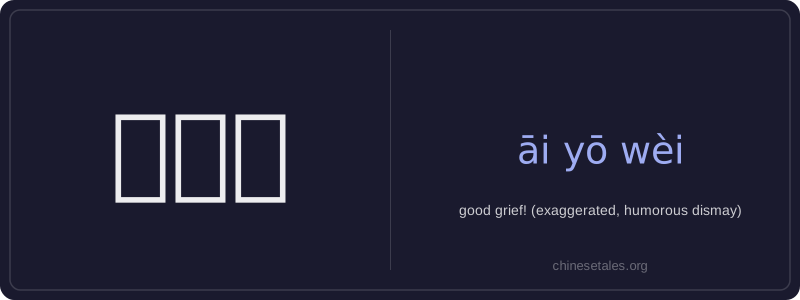
'Āi yō wèi' is a highly expressive, exaggerated interjection used to convey sudden, humorous dismay—like stubbing your toe, dropping your phone, or hearing shocking news. Though it looks like three separate characters, it functions as a single unit with no literal meaning; each syllable contributes to its theatrical, drawn-out sound. It's not a compound word but an emphatic vocalization, often delivered with a rising-falling tone and widened eyes for comic effect.
This phrase belongs to informal spoken Chinese and appears frequently in sitcoms, online videos, and daily banter among friends or family. It’s more playful and less serious than simpler exclamations like 'āi yō' or 'tiān a', and the extra 'wèi' adds a layer of mock despair or theatrical flair. Native speakers rarely use it in writing unless mimicking speech, and it’s almost never appropriate in formal or professional contexts.
Example Sentences
Related Words
国语
‘Guó yǔ’ literally means 'national language'—
无论谁
‘无论谁’ (wú lùn shéi) is a pronoun meaning
外语
‘外语’ literally means ‘outside language’ —
面条
‘面条’ (miàn tiáo) literally means ‘flour str
不对
不对 (bù duì) literally combines 不 (bù), meani
认为
‘认为’ (rèn wéi) is a transitive verb meaning
认同
‘认同’ (tóng rèn) is a verb meaning ‘to ident
中学
'Zhōngxué' literally combines 'zhōng' (middle)