Word Explanation
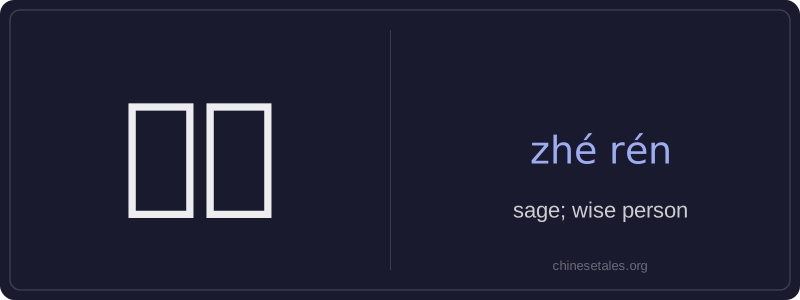
‘哲人’ literally combines 哲 (zhé), meaning 'wise', 'philosophical', or 'profound', and 人 (rén), meaning 'person'. Together, it refers to a sage — someone renowned for deep wisdom, moral insight, and philosophical understanding. Unlike everyday terms like 聪明人 (smart person) or 老师 (teacher), 哲人 carries classical, elevated connotations, often evoking figures from ancient Chinese philosophy (e.g., Confucius, Laozi) or revered thinkers across cultures.
The term is formal and literary, appearing frequently in essays, historical texts, speeches, and poetic contexts. It emphasizes not just intelligence but ethical depth, calm judgment, and timeless perspective. While rarely used in casual conversation, it’s common in written Chinese when praising or referencing exemplary moral or intellectual leaders — especially in discussions of tradition, education, or human values.
Example Sentences
Related Words
国语
‘Guó yǔ’ literally means 'national language'—
无论谁
‘无论谁’ (wú lùn shéi) is a pronoun meaning
外语
‘外语’ literally means ‘outside language’ —
面条
‘面条’ (miàn tiáo) literally means ‘flour str
不对
不对 (bù duì) literally combines 不 (bù), meani
认为
‘认为’ (rèn wéi) is a transitive verb meaning
认同
‘认同’ (tóng rèn) is a verb meaning ‘to ident
中学
'Zhōngxué' literally combines 'zhōng' (middle)