Word Explanation
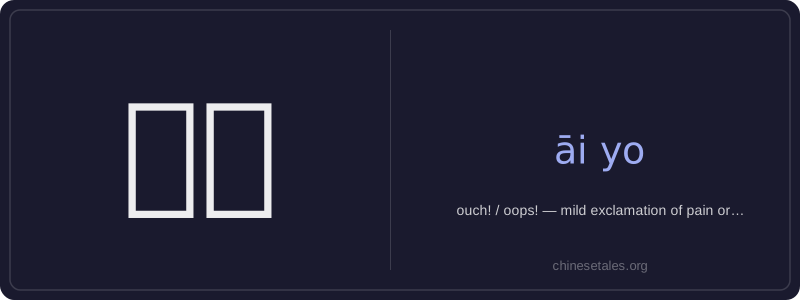
‘Āi yo’ is a common, informal interjection used to express mild physical pain, sudden surprise, or light dismay — similar to English ‘ouch!’ or ‘oops!’ It’s not a compound word with independent lexical meaning; rather, the two characters function together as a fixed exclamatory unit. ‘Āi’ often conveys a soft sigh or startle, while ‘yō’ adds emphasis and emotional color, making the phrase more vivid and conversational.
This expression is widely heard in everyday speech, especially in spoken Mandarin and regional dialect-influenced contexts (e.g., Northern China). It carries no strong negative connotation and is appropriate among friends or family, but too casual for formal writing or professional settings. It’s rarely written except in dialogue or informal texts like chats and subtitles. Unlike stronger expressions like ‘wā!’ or ‘āi yā!’, ‘āi yo’ suggests moderate intensity — think stubbing your toe, dropping a pen, or realizing you’ve forgotten something small.
Example Sentences
Related Words
国语
‘Guó yǔ’ literally means 'national language'—
无论谁
‘无论谁’ (wú lùn shéi) is a pronoun meaning
外语
‘外语’ literally means ‘outside language’ —
面条
‘面条’ (miàn tiáo) literally means ‘flour str
不对
不对 (bù duì) literally combines 不 (bù), meani
认为
‘认为’ (rèn wéi) is a transitive verb meaning
认同
‘认同’ (tóng rèn) is a verb meaning ‘to ident
中学
'Zhōngxué' literally combines 'zhōng' (middle)