Word Explanation
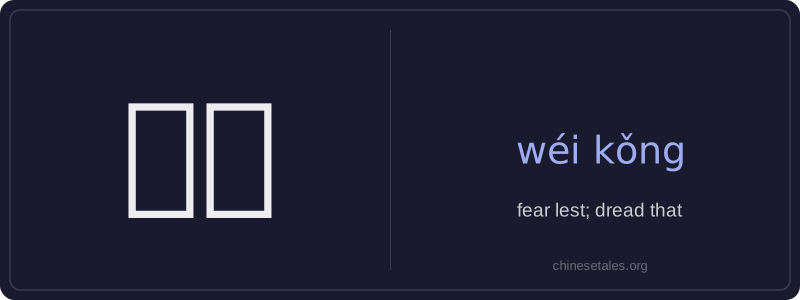
‘唯恐’ is a classical and formal conjunction meaning 'fear lest' or 'dread that', expressing intense anxiety about a possible negative outcome. Though composed of two characters—唯 (wéi), meaning 'only' or 'solely', and 恐 (kǒng), meaning 'to fear'—together they form an idiomatic expression indicating the speaker’s deep concern that something undesirable might happen. It conveys a sense of urgency and precaution, often implying that the subject takes action to prevent the feared event.
This word appears frequently in written Chinese—especially in essays, news reports, and formal speech—but is rare in casual spoken conversation. It typically introduces a subordinate clause beginning with ‘唯恐 + [subject] + [verb phrase]’, and is almost always followed by a negative or undesirable result. Its tone is serious and somewhat literary, lending gravity to warnings, precautions, or expressions of vigilance.
Example Sentences
Related Words
国语
‘Guó yǔ’ literally means 'national language'—
无论谁
‘无论谁’ (wú lùn shéi) is a pronoun meaning
外语
‘外语’ literally means ‘outside language’ —
面条
‘面条’ (miàn tiáo) literally means ‘flour str
不对
不对 (bù duì) literally combines 不 (bù), meani
认为
‘认为’ (rèn wéi) is a transitive verb meaning
认同
‘认同’ (tóng rèn) is a verb meaning ‘to ident
中学
'Zhōngxué' literally combines 'zhōng' (middle)