Word Explanation
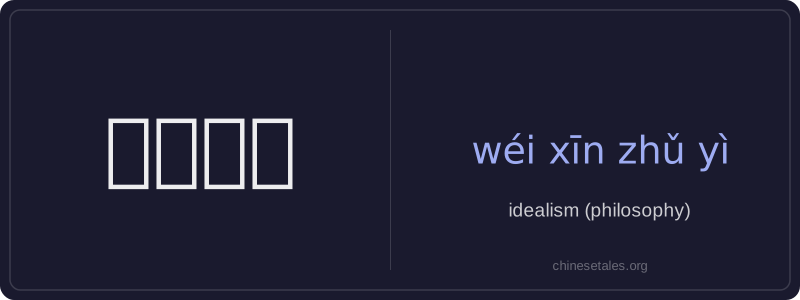
'Wei xin zhu yi' (idealism) is a philosophical position asserting that reality is fundamentally mental or spiritual—i.e., ideas, consciousness, or the mind shape or constitute the world, rather than matter. The characters combine meaningfully: 唯 (wéi) means 'only' or 'solely'; 心 (xīn) means 'mind' or 'heart'; 主 (zhǔ) means 'master' or 'principal'; and 义 (yì) means 'doctrine' or 'principle'. Together, they literally convey 'the doctrine that the mind alone is master'—emphasizing mind as the primary or sole basis of reality.
This term is used almost exclusively in academic, philosophical, or critical contexts—especially when contrasting with materialism (唯物主义 wéi wù zhǔ yì). It appears in university philosophy courses, political theory discussions (e.g., Marxist critiques), and scholarly writing. While historically linked to Western thinkers like Berkeley or Hegel, Chinese intellectual discourse often references it through classical or modern interpretations, sometimes with nuanced distinctions between subjective and objective idealism.
Example Sentences
Related Words
国语
‘Guó yǔ’ literally means 'national language'—
无论谁
‘无论谁’ (wú lùn shéi) is a pronoun meaning
外语
‘外语’ literally means ‘outside language’ —
面条
‘面条’ (miàn tiáo) literally means ‘flour str
不对
不对 (bù duì) literally combines 不 (bù), meani
认为
‘认为’ (rèn wéi) is a transitive verb meaning
认同
‘认同’ (tóng rèn) is a verb meaning ‘to ident
中学
'Zhōngxué' literally combines 'zhōng' (middle)