Word Explanation
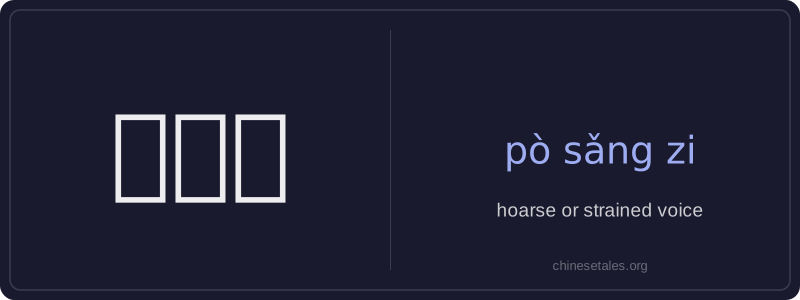
‘破嗓子’ literally means ‘broken voice’ — ‘破’ (pò) means ‘broken’, ‘damaged’, or ‘worn out’; ‘嗓’ (sǎng) refers specifically to the throat or vocal cords; and ‘子’ (zi) is a common noun suffix that adds a colloquial, concrete quality. Together, the term describes a voice that sounds rough, raspy, strained, or weak due to overuse, illness, shouting, or fatigue — not a medical diagnosis, but a vivid, everyday description of vocal discomfort.
This expression is informal and frequently used in spoken Mandarin, especially when commenting on someone’s speaking or singing ability after prolonged use. It carries a slightly sympathetic or humorous tone — for example, praising a singer’s stamina while joking about their ‘broken voice’. It’s rarely used in formal writing or clinical contexts, where terms like ‘声音嘶哑’ (shēngyīn sīyǎ) would be preferred.
Example Sentences
Related Words
国语
‘Guó yǔ’ literally means 'national language'—
无论谁
‘无论谁’ (wú lùn shéi) is a pronoun meaning
外语
‘外语’ literally means ‘outside language’ —
面条
‘面条’ (miàn tiáo) literally means ‘flour str
不对
不对 (bù duì) literally combines 不 (bù), meani
认为
‘认为’ (rèn wéi) is a transitive verb meaning
认同
‘认同’ (tóng rèn) is a verb meaning ‘to ident
中学
'Zhōngxué' literally combines 'zhōng' (middle)