Word Explanation
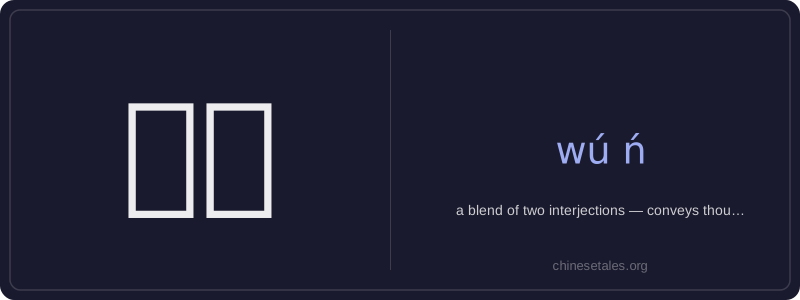
'唔嗯' is a compound interjection formed by blending the two common hesitation sounds 唔 (wú) and 嗯 (ńg). It does not carry lexical meaning but functions as a vocalized pause—expressing thoughtful uncertainty, gentle disagreement, emotional restraint, or mild reluctance. Unlike single interjections, this reduplicated form adds nuance: it often signals the speaker is processing information, holding back stronger feelings, or softening a response to avoid confrontation or embarrassment.
This expression appears frequently in informal spoken Mandarin, especially in dialogues where speakers are being tactful, reflective, or emotionally guarded. It’s more common in southern dialect-influenced speech and younger urban usage, and carries a slightly tender, hesitant, or even endearing tone—not dismissive or impatient like '呃 (e)' or '啊 (ā)'. Native speakers recognize it instantly as a marker of subtle emotional modulation rather than mere filler.
Example Sentences
Related Words
国语
‘Guó yǔ’ literally means 'national language'—
无论谁
‘无论谁’ (wú lùn shéi) is a pronoun meaning
外语
‘外语’ literally means ‘outside language’ —
面条
‘面条’ (miàn tiáo) literally means ‘flour str
不对
不对 (bù duì) literally combines 不 (bù), meani
认为
‘认为’ (rèn wéi) is a transitive verb meaning
认同
‘认同’ (tóng rèn) is a verb meaning ‘to ident
中学
'Zhōngxué' literally combines 'zhōng' (middle)