Word Explanation
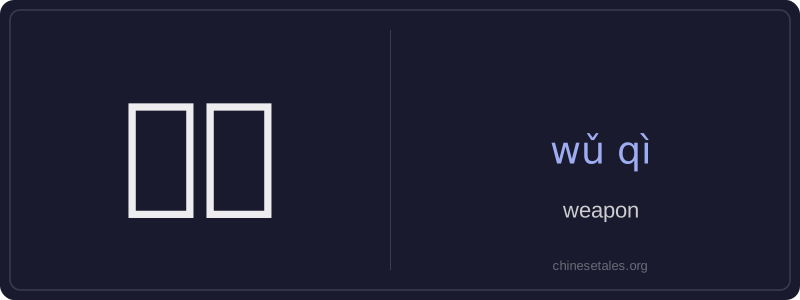
武器 (wǔ qì) literally means 'martial tool' — 武 (wǔ) refers to martial arts, warfare, or military matters, while 器 (qì) means 'tool', 'instrument', or 'device'. Together, they form a formal, general term for any object designed or used for combat, defense, or inflicting harm — from ancient swords and bows to modern firearms and missiles. It is a neutral, standard noun used in news reports, historical texts, legal documents, and military contexts.
The word carries no inherent moral judgment but often appears in serious or official discourse — for example, when discussing arms control, self-defense laws, or historical warfare. It is not used for everyday objects repurposed as weapons (e.g., a chair used to strike someone), nor for metaphorical 'weapons' like 'weapons of mass persuasion' — those require different phrasing (e.g., 工具 or 手段). It’s more formal than colloquial alternatives like 枪 (qiāng, 'gun') or 刀 (dāo, 'knife'), which name specific items.
Example Sentences
Related Words
国语
‘Guó yǔ’ literally means 'national language'—
无论谁
‘无论谁’ (wú lùn shéi) is a pronoun meaning
外语
‘外语’ literally means ‘outside language’ —
面条
‘面条’ (miàn tiáo) literally means ‘flour str
不对
不对 (bù duì) literally combines 不 (bù), meani
认为
‘认为’ (rèn wéi) is a transitive verb meaning
认同
‘认同’ (tóng rèn) is a verb meaning ‘to ident
中学
'Zhōngxué' literally combines 'zhōng' (middle)