Word Explanation
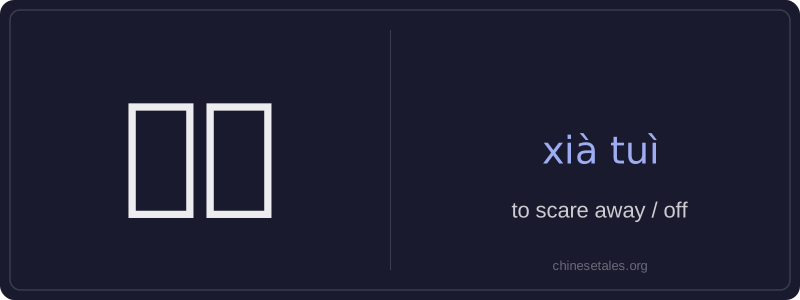
‘吓退’ is a compound verb meaning 'to scare away' or 'to drive off by frightening'. It combines the verb 吓 (xià, 'to frighten') and the directional verb 退 (tuì, 'to retreat, withdraw'), together conveying the idea of causing someone or something to back away or flee due to fear. The structure implies an active, often sudden, effect — the subject instills fear that results in the object’s withdrawal.
This word is commonly used in contexts involving confrontation, defense, or deterrence — for example, when animals flee from predators, people retreat from threatening situations, or security measures discourage intruders. It carries a neutral-to-slightly formal tone and appears frequently in news reports, nature documentaries, and everyday descriptions of reactive behavior. Unlike simple verbs like ‘逃跑’ (to run away), ‘吓退’ emphasizes causation: someone or something *causes* the retreat through intimidation or fear.
Example Sentences
Related Words
国语
‘Guó yǔ’ literally means 'national language'—
无论谁
‘无论谁’ (wú lùn shéi) is a pronoun meaning
外语
‘外语’ literally means ‘outside language’ —
面条
‘面条’ (miàn tiáo) literally means ‘flour str
不对
不对 (bù duì) literally combines 不 (bù), meani
认为
‘认为’ (rèn wéi) is a transitive verb meaning
认同
‘认同’ (tóng rèn) is a verb meaning ‘to ident
中学
'Zhōngxué' literally combines 'zhōng' (middle)