Word Explanation
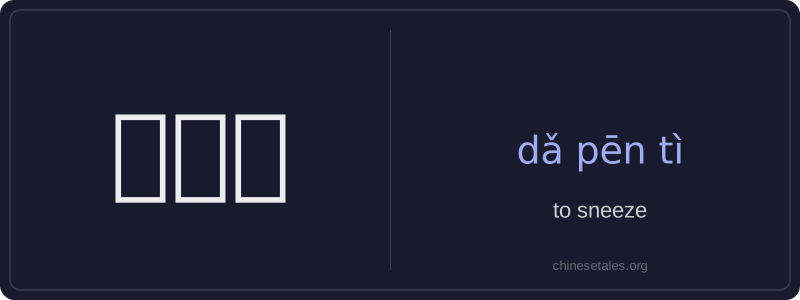
‘打喷嚏’ is a common Chinese verb meaning ‘to sneeze’. It literally combines three characters: 打 (dǎ), which here functions as a verbal prefix indicating the initiation or occurrence of an action; 喷 (pēn), meaning ‘to spray’ or ‘to expel forcefully’; and 嚏 (tì), a bound morpheme referring specifically to a sneeze. Together, they vividly convey the physical act of suddenly expelling air through the nose and mouth due to irritation or illness.
This phrase is used in everyday spoken and written Chinese, especially when describing colds, allergies, or reactions to dust or strong smells. Unlike English, where ‘sneeze’ stands alone, Chinese requires the full three-character compound — you cannot say just ‘喷嚏’ as a verb (it’s a noun) or omit ‘打’. It’s often accompanied by onomatopoeic expressions like ‘阿嚏!(ā tì!)’ to mimic the sound of sneezing.
Example Sentences
Related Words
国语
‘Guó yǔ’ literally means 'national language'—
无论谁
‘无论谁’ (wú lùn shéi) is a pronoun meaning
外语
‘外语’ literally means ‘outside language’ —
面条
‘面条’ (miàn tiáo) literally means ‘flour str
不对
不对 (bù duì) literally combines 不 (bù), meani
认为
‘认为’ (rèn wéi) is a transitive verb meaning
认同
‘认同’ (tóng rèn) is a verb meaning ‘to ident
中学
'Zhōngxué' literally combines 'zhōng' (middle)