Word Explanation
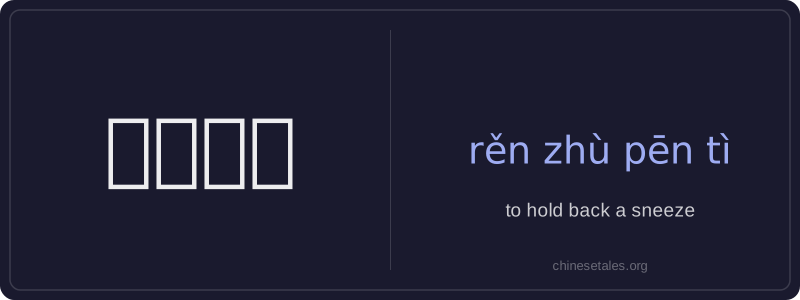
‘忍住喷嚏’ literally means ‘to endure and hold back a sneeze’. It is a verb phrase describing the conscious effort to suppress the natural reflex of sneezing—often done in quiet or formal settings like meetings, classrooms, or while caring for others. The character 忍 (rěn) means ‘to endure’ or ‘to restrain’, 住 (zhù) functions as a resultative complement indicating completion or cessation of action, 喷 (pēn) means ‘to spray’ or ‘to expel forcefully’, and 嚏 (tì) specifically refers to a ‘sneeze’. Together, they form an idiomatic expression emphasizing active self-control over a bodily impulse.
This phrase is commonly used in health-related advice, everyday conversation, and medical contexts—for instance, when explaining why suppressing sneezes can be harmful (e.g., pressure buildup in ears or sinuses). It’s not used as a noun or standalone concept but always as part of a verbal construction, typically with subjects like ‘I’, ‘he’, or ‘you’ followed by auxiliary verbs like 想 (want to), 试图 (try to), or 成功 (succeed in).
Example Sentences
Related Words
国语
‘Guó yǔ’ literally means 'national language'—
无论谁
‘无论谁’ (wú lùn shéi) is a pronoun meaning
外语
‘外语’ literally means ‘outside language’ —
面条
‘面条’ (miàn tiáo) literally means ‘flour str
不对
不对 (bù duì) literally combines 不 (bù), meani
认为
‘认为’ (rèn wéi) is a transitive verb meaning
认同
‘认同’ (tóng rèn) is a verb meaning ‘to ident
中学
'Zhōngxué' literally combines 'zhōng' (middle)