Word Explanation
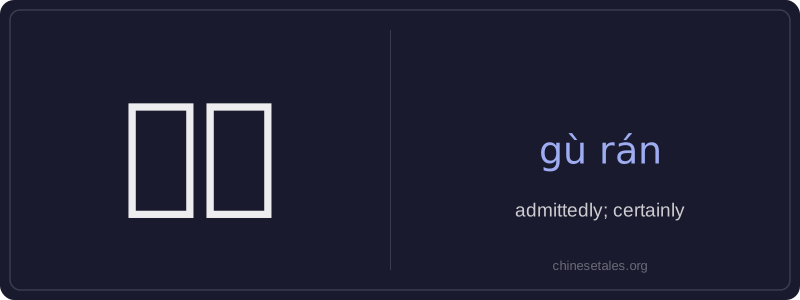
固然是一个 classical yet still widely used conjunction/adverb meaning 'admittedly' or 'certainly'—it introduces a concession or acknowledges a truth before contrasting it with another point (often implied or stated later). The character 固 means 'firm' or 'solid', and 然 means 'thus' or 'so'; together, they convey the sense of 'indeed so' or 'it is certainly the case'. It often appears at the beginning of a clause and signals that what follows is true but not the whole story.
This word carries a slightly formal or literary tone and is common in written Chinese and thoughtful spoken discourse—such as debates, essays, or polite disagreement. It rarely stands alone; instead, it frequently pairs with words like '但' (but), '然而' (however), or '可是' (yet) to set up contrast. Learners should note it’s not interchangeable with simple affirmatives like '当然' (of course), which expresses agreement rather than concession.
Example Sentences
Related Words
国语
‘Guó yǔ’ literally means 'national language'—
无论谁
‘无论谁’ (wú lùn shéi) is a pronoun meaning
外语
‘外语’ literally means ‘outside language’ —
面条
‘面条’ (miàn tiáo) literally means ‘flour str
不对
不对 (bù duì) literally combines 不 (bù), meani
认为
‘认为’ (rèn wéi) is a transitive verb meaning
认同
‘认同’ (tóng rèn) is a verb meaning ‘to ident
中学
'Zhōngxué' literally combines 'zhōng' (middle)