Word Explanation
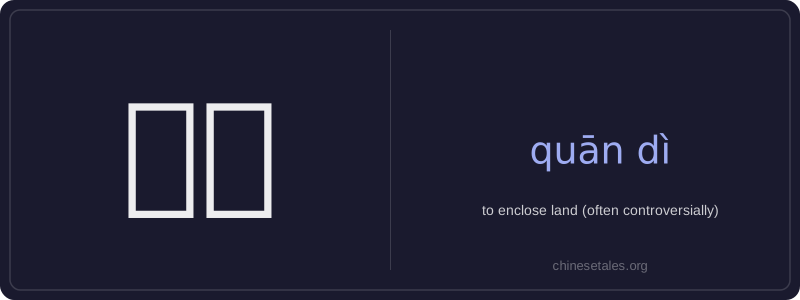
‘圈地’ literally means ‘to enclose land’ — the character 圈 (quān) means ‘to encircle’ or ‘to fence off’, and 地 (dì) means ‘land’ or ‘ground’. Together, they describe the act of demarcating and taking control of a piece of land, often by building fences or barriers. Historically, this term evokes England’s 18th-century Enclosure Acts, but in modern Chinese usage, it commonly refers to controversial land appropriation — for example, when developers or local governments seize farmland for construction without fair compensation or consent.
The phrase carries strong connotations of illegitimacy, injustice, or abuse of power. It appears frequently in news reports, policy debates, and social media discussions about rural land rights, urban expansion, and environmental protection. While grammatically neutral, ‘圈地’ is almost always used critically — you won’t hear it praising ethical land management. It can function as a verb (e.g., 圈地建厂) or a noun (e.g., 圈地行为), but the verbal use is far more common.
Example Sentences
Related Words
国语
‘Guó yǔ’ literally means 'national language'—
无论谁
‘无论谁’ (wú lùn shéi) is a pronoun meaning
外语
‘外语’ literally means ‘outside language’ —
面条
‘面条’ (miàn tiáo) literally means ‘flour str
不对
不对 (bù duì) literally combines 不 (bù), meani
认为
‘认为’ (rèn wéi) is a transitive verb meaning
认同
‘认同’ (tóng rèn) is a verb meaning ‘to ident
中学
'Zhōngxué' literally combines 'zhōng' (middle)