Word Explanation
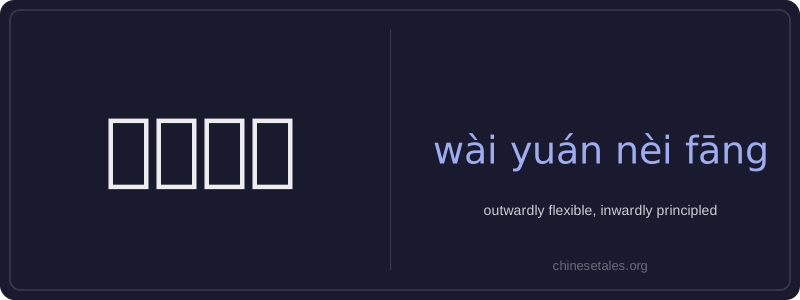
‘Wài yuán nèi fāng’ is a classical Chinese idiom describing a person’s balanced moral character: outwardly gentle, adaptable, and socially smooth (like a circle), while inwardly firm, upright, and unwavering in principle (like a square). The word combines four characters—‘wài’ (outside), ‘yuán’ (round/circular), ‘nèi’ (inside), and ‘fāng’ (square)—to evoke this dual-layered integrity. Historically rooted in Confucian and Daoist thought, it praises wisdom in navigating human relationships without compromising core values.
This phrase is often used to describe mature, respected individuals—especially leaders, teachers, or elders—who handle conflict diplomatically yet never sacrifice ethics or honesty. It carries positive connotations of emotional intelligence, self-discipline, and quiet strength. While literally picturing a round exterior enclosing a square interior, the idiom functions metaphorically and is rarely used in literal or physical descriptions.
Example Sentences
Related Words
国语
‘Guó yǔ’ literally means 'national language'—
无论谁
‘无论谁’ (wú lùn shéi) is a pronoun meaning
外语
‘外语’ literally means ‘outside language’ —
面条
‘面条’ (miàn tiáo) literally means ‘flour str
不对
不对 (bù duì) literally combines 不 (bù), meani
认为
‘认为’ (rèn wéi) is a transitive verb meaning
认同
‘认同’ (tóng rèn) is a verb meaning ‘to ident
中学
'Zhōngxué' literally combines 'zhōng' (middle)