Word Explanation
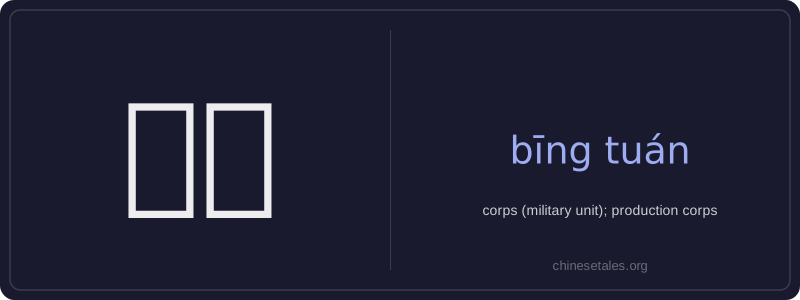
兵团 (bīng tuán) literally combines 兵 (bīng), meaning 'soldier' or 'military personnel,' and 团 (tuán), meaning 'unit' or 'group.' Historically, it refers to a large military formation—roughly equivalent to a 'corps' in Western armies—comprising multiple divisions. In modern Chinese usage, however, 兵团 most commonly denotes the Xinjiang Production and Construction Corps (XPCC), a unique paramilitary organization responsible for agriculture, industry, infrastructure, and border security in Xinjiang.
The XPCC is not a standing army but functions as a state-run economic and administrative entity with quasi-military structure and discipline. Its members are often former soldiers or civilian settlers who work on state farms and factories while maintaining readiness for civil defense. The term carries strong regional and historical connotations, especially tied to China’s frontier development policies since the 1950s.
Example Sentences
Related Words
国语
‘Guó yǔ’ literally means 'national language'—
无论谁
‘无论谁’ (wú lùn shéi) is a pronoun meaning
外语
‘外语’ literally means ‘outside language’ —
面条
‘面条’ (miàn tiáo) literally means ‘flour str
不对
不对 (bù duì) literally combines 不 (bù), meani
认为
‘认为’ (rèn wéi) is a transitive verb meaning
认同
‘认同’ (tóng rèn) is a verb meaning ‘to ident
中学
'Zhōngxué' literally combines 'zhōng' (middle)