Word Explanation
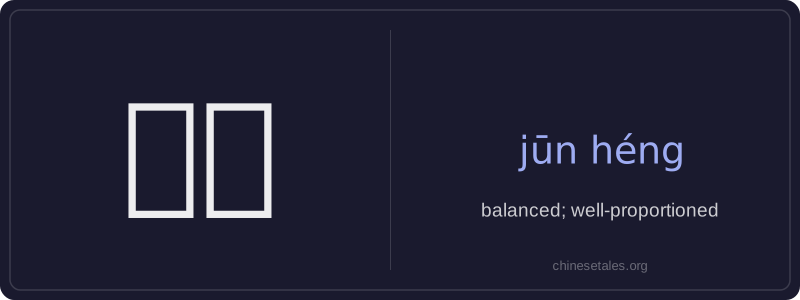
均衡 (jūn héng) is an adjective meaning 'balanced' or 'well-proportioned', emphasizing harmony and equal distribution among interrelated elements. The first character 均 (jūn) means 'even', 'uniform', or 'equal', while 衡 (héng) originally referred to a weighing scale and conveys the idea of 'measuring', 'judging', or 'maintaining equilibrium'. Together, they evoke the image of carefully weighing and balancing multiple factors—like nutrients in a diet, work and rest in daily life, or physical and mental energy.
This word is frequently used in formal or semi-formal contexts, especially in health, education, economics, and environmental discussions. It implies conscious effort toward fairness, stability, or sustainability—not just static equality, but dynamic adjustment to maintain harmony. You’ll often see it in phrases like 均衡饮食 (balanced diet), 均衡发展 (balanced development), or 均衡营养 (balanced nutrition). While it can occasionally function as a noun, its primary and most natural use is adjectival.
Example Sentences
Related Words
国语
‘Guó yǔ’ literally means 'national language'—
无论谁
‘无论谁’ (wú lùn shéi) is a pronoun meaning
外语
‘外语’ literally means ‘outside language’ —
面条
‘面条’ (miàn tiáo) literally means ‘flour str
不对
不对 (bù duì) literally combines 不 (bù), meani
认为
‘认为’ (rèn wéi) is a transitive verb meaning
认同
‘认同’ (tóng rèn) is a verb meaning ‘to ident
中学
'Zhōngxué' literally combines 'zhōng' (middle)