Word Explanation
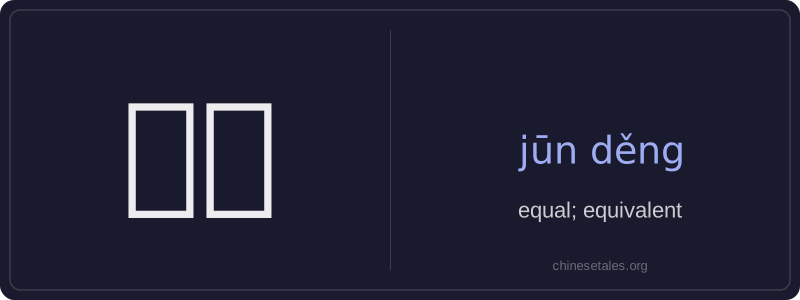
均等 (jūn děng) is an adjective meaning 'equal' or 'equivalent', emphasizing fairness, balance, and impartial distribution—especially in quantity, opportunity, or treatment. The character 均 (jūn) means 'even', 'uniform', or 'to divide equally', while 等 (děng) here functions as a noun suffix meaning 'level' or 'grade'; together, they convey the idea of things being at the same level or proportionally balanced. Unlike the more general word 平等 (píng děng), which stresses social or moral equality, 均等 focuses on quantitative or procedural parity—such as equal shares, evenly distributed resources, or identical standards applied across cases.
This term is common in formal contexts: education policy, workplace regulations, legal documents, and public administration. It often appears in phrases like 均等分配 (jūn děng fēn pèi, 'equal distribution') or 教育机会均等 (jiào yù jī huì jūn děng, 'equal access to education'). While it can occasionally function as a noun in fixed expressions, its primary use is adjectival, typically preceding nouns or following verbs like 实现 (shí xiàn, 'to achieve') or 保证 (bǎo zhèng, 'to guarantee').
Example Sentences
Related Words
国语
‘Guó yǔ’ literally means 'national language'—
无论谁
‘无论谁’ (wú lùn shéi) is a pronoun meaning
外语
‘外语’ literally means ‘outside language’ —
面条
‘面条’ (miàn tiáo) literally means ‘flour str
不对
不对 (bù duì) literally combines 不 (bù), meani
认为
‘认为’ (rèn wéi) is a transitive verb meaning
认同
‘认同’ (tóng rèn) is a verb meaning ‘to ident
中学
'Zhōngxué' literally combines 'zhōng' (middle)