Word Explanation
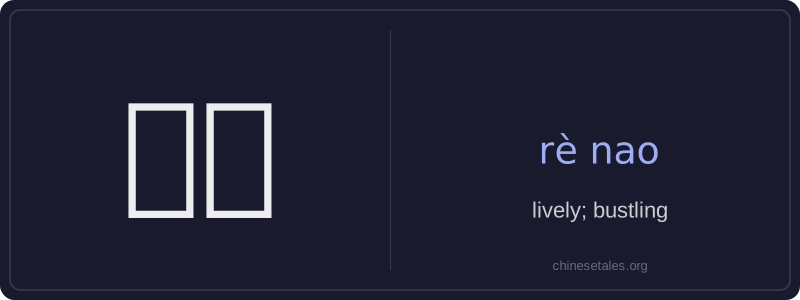
热闹 (rè nao) is an adjective meaning 'lively' or 'bustling'—describing places, events, or atmospheres full of energy, activity, and cheerful noise. Literally, 热 (rè) means 'hot' and 闹 (nào) means 'noisy' or 'boisterous'; together, they evoke the warm, energetic buzz of a crowded market, festival, or family gathering. It carries positive connotations—never chaotic or unpleasant, but joyfully animated.
This word is commonly used to describe physical spaces (e.g., streets, parks, restaurants), social occasions (weddings, Spring Festival celebrations), or even abstract situations (a lively debate or a vibrant online discussion). It can function predicatively ('The square is lively') or attributively ('a bustling night market'), but it rarely modifies nouns directly without 的 in formal writing—though colloquially, '热闹场面' is widely accepted.
Example Sentences
Related Words
见面
见面 literally means 'see face' — combining 见 (t
后来
Later (hòulái) is an adverb meaning 'afterwards'
背后
背后 literally means 'back + behind' and functions
我的
我的 (wǒ de) is a possessive pronoun meaning 'my'
这么
这么 (zhè me) is an adverb meaning 'so' or 'this
中学
'Zhōngxué' literally combines 'zhōng' (middle)
前面
前面 (qián miàn) literally combines 前 (qián, '
面条
‘面条’ (miàn tiáo) literally means ‘flour str