Word Explanation
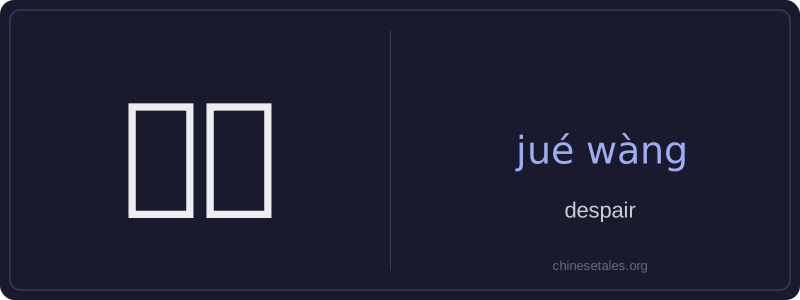
‘绝望’ (jué wàng) literally combines ‘绝’ (jué), meaning 'cut off', 'ended', or 'absolute', and ‘望’ (wàng), meaning 'hope' or 'to look forward to'. Together, they form a compound expressing the complete absence of hope — a profound, often overwhelming emotional state where one believes no positive outcome is possible. It conveys deeper gravity than mere disappointment or sadness; it suggests psychological exhaustion and a sense of finality.
This word appears frequently in literature, news reports about crises, and personal narratives describing severe hardship — such as chronic illness, financial ruin, or loss. While it can function as a noun ('a feeling of despair'), it’s also commonly used adjectivally before nouns (e.g., 绝望的眼神 — 'despairing eyes') or predicatively after verbs like 是 or 感到. It carries strong negative connotation and is rarely used lightly or humorously.
Example Sentences
Related Words
国语
‘Guó yǔ’ literally means 'national language'—
面条
‘面条’ (miàn tiáo) literally means ‘flour str
无论谁
‘无论谁’ (wú lùn shéi) is a pronoun meaning
背后
背后 literally means 'back + behind' and functions
外语
‘外语’ literally means ‘outside language’ —
认同
‘认同’ (tóng rèn) is a verb meaning ‘to ident
中学
'Zhōngxué' literally combines 'zhōng' (middle)
认为
‘认为’ (rèn wéi) is a transitive verb meaning