Word Explanation
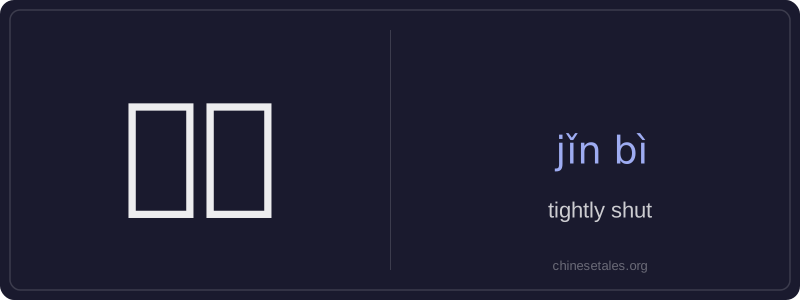
紧闭 (jǐn bì) is an adjective meaning 'tightly shut' — describing something closed so firmly that no gap remains, often implying effort, intention, or physical force. The first character 紧 (jǐn) means 'tight', 'tense', or 'close', while 闭 (bì) means 'to close' or 'to shut'. Together, they emphasize the completeness and firmness of closure, not just a passive state but an actively secured one.
This term is commonly used for doors, windows, eyes, lips, or even abstract concepts like 'mouth' in expressions like '紧闭嘴巴' (keep one's mouth tightly shut). It appears frequently in descriptive writing, instructions ('紧闭门窗' — seal doors and windows), safety warnings, and literary contexts to convey tension, secrecy, or protection. Unlike simple 闭, which can be neutral or temporary, 紧闭 carries a stronger sense of finality, intensity, or urgency.
Example Sentences
Related Words
国语
‘Guó yǔ’ literally means 'national language'—
面条
‘面条’ (miàn tiáo) literally means ‘flour str
无论谁
‘无论谁’ (wú lùn shéi) is a pronoun meaning
背后
背后 literally means 'back + behind' and functions
外语
‘外语’ literally means ‘outside language’ —
认同
‘认同’ (tóng rèn) is a verb meaning ‘to ident
中学
'Zhōngxué' literally combines 'zhōng' (middle)
认为
‘认为’ (rèn wéi) is a transitive verb meaning