Word Explanation
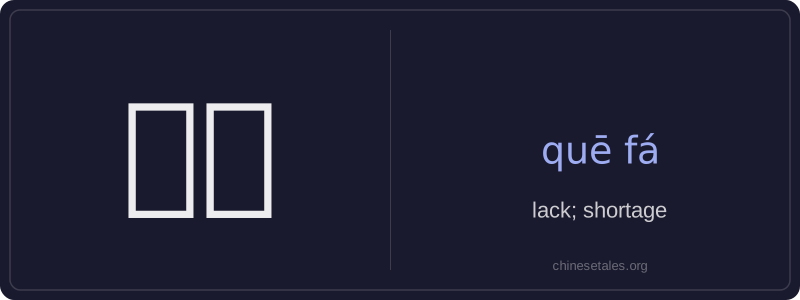
缺乏 (quēfá) means 'lack' or 'shortage' and functions as both a noun and a verb. The character 缺 (quē) means 'to be missing' or 'deficient', while 乏 (fá) means 'to be exhausted' or 'insufficient'. Together, they form a compound that emphasizes an absence or insufficiency of something necessary — often tangible resources like nutrients, time, or money, or intangible qualities like experience or confidence. It is commonly used in formal, written, and spoken contexts, especially in discussions about health, education, economics, and social issues.
This word typically appears before the thing that is lacking (e.g., 缺乏经验 'lack of experience') or with 是...的 for emphasis (e.g., 问题是他缺乏耐心 'The problem is that he lacks patience'). Unlike the more colloquial 没有, 缺乏 carries a slightly formal or analytical tone and often implies a problematic or undesirable gap that needs addressing.
Example Sentences
Related Words
国语
‘Guó yǔ’ literally means 'national language'—
面条
‘面条’ (miàn tiáo) literally means ‘flour str
无论谁
‘无论谁’ (wú lùn shéi) is a pronoun meaning
背后
背后 literally means 'back + behind' and functions
外语
‘外语’ literally means ‘outside language’ —
认同
‘认同’ (tóng rèn) is a verb meaning ‘to ident
中学
'Zhōngxué' literally combines 'zhōng' (middle)
认为
‘认为’ (rèn wéi) is a transitive verb meaning