Word Explanation
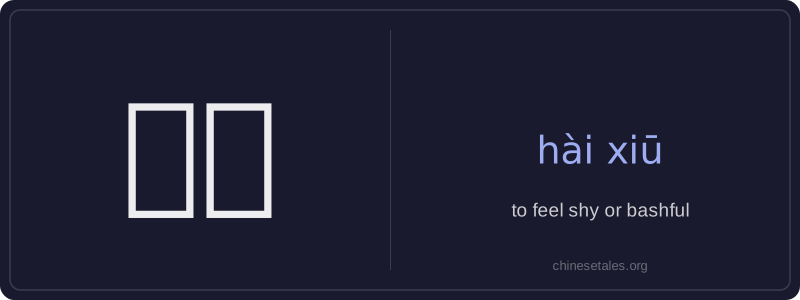
害羞 (hài xiū) is an adjective meaning 'shy' or 'bashful'—describing a feeling of nervous self-consciousness, especially in social situations. The first character 害 (hài) originally means 'to harm' but here functions as a verb-like prefix indicating a negative emotional reaction; 羞 (xiū) means 'shame' or 'embarrassment'. Together, they convey the sense of being inwardly unsettled or flustered by attention, judgment, or unfamiliar interaction. It’s commonly used to describe people—especially children, teenagers, or those new to a situation—who avoid eye contact, speak softly, or withdraw when addressed.
This word reflects a culturally valued modesty in many Chinese contexts and is often used neutrally or sympathetically—not negatively. It can describe temporary states ('She feels shy today') or more enduring personality traits ('He’s always shy around strangers'). Unlike some English synonyms, 害羞 doesn’t imply social anxiety disorder; it’s everyday, mild, and socially acceptable. It’s rarely used for animals or objects unless in playful anthropomorphism.
Example Sentences
Related Words
国语
‘Guó yǔ’ literally means 'national language'—
面条
‘面条’ (miàn tiáo) literally means ‘flour str
无论谁
‘无论谁’ (wú lùn shéi) is a pronoun meaning
背后
背后 literally means 'back + behind' and functions
外语
‘外语’ literally means ‘outside language’ —
认同
‘认同’ (tóng rèn) is a verb meaning ‘to ident
中学
'Zhōngxué' literally combines 'zhōng' (middle)
认为
‘认为’ (rèn wéi) is a transitive verb meaning