Word Explanation
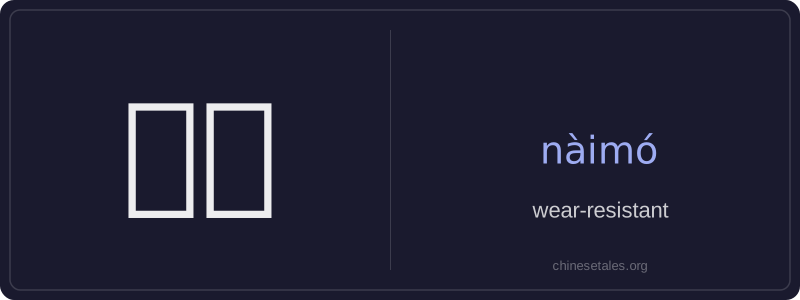
'耐磨' (nàimó) is a compound adjective meaning 'wear-resistant' or 'abrasion-resistant'. It combines two characters: 耐 (nài), meaning 'to withstand' or 'to endure', and 磨 (mó), meaning 'to rub', 'to grind', or 'abrasion'. Together, they literally convey the ability to 'withstand rubbing/friction' — describing materials that resist damage from repeated physical contact, scraping, or erosion over time.
This term is widely used in technical, industrial, and everyday contexts involving durability — especially for shoes, flooring, machinery parts, tools, and textiles. While it functions adjectivally (e.g., 耐磨鞋底), it rarely stands alone as a noun; instead, it modifies nouns directly or appears in phrases like 耐磨性 (nàimóxìng, 'wear resistance', a noun). It’s neutral in register and common in both spoken and written Chinese when discussing product quality or material properties.
Example Sentences
Related Words
国语
‘Guó yǔ’ literally means 'national language'—
面条
‘面条’ (miàn tiáo) literally means ‘flour str
无论谁
‘无论谁’ (wú lùn shéi) is a pronoun meaning
背后
背后 literally means 'back + behind' and functions
外语
‘外语’ literally means ‘outside language’ —
认同
‘认同’ (tóng rèn) is a verb meaning ‘to ident
中学
'Zhōngxué' literally combines 'zhōng' (middle)
认为
‘认为’ (rèn wéi) is a transitive verb meaning