Word Explanation
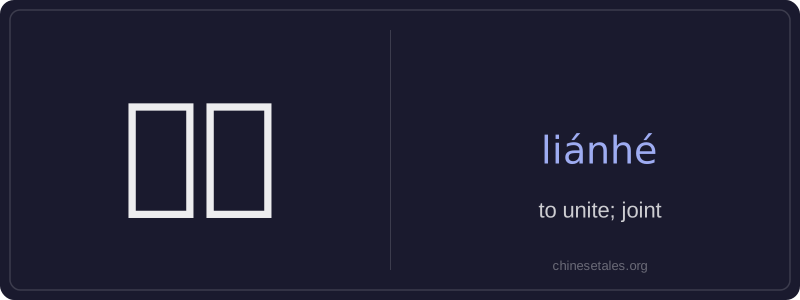
'联合' (liánhé) is a compound word formed from two characters: '联' (lián), meaning 'to connect' or 'to link', and '合' (hé), meaning 'to join' or 'to combine'. Together, they convey the idea of bringing separate entities together for a shared purpose — whether people, organizations, countries, or ideas. As a verb, it emphasizes the action of uniting; as an adjective, it describes something that is jointly operated or co-owned.
This word is commonly used in formal, institutional, or cooperative contexts — such as international alliances, business partnerships, academic collaborations, or joint ventures. It carries a neutral-to-positive connotation and implies intentionality, coordination, and mutual agreement. You’ll often see it in news headlines, official documents, and organizational names (e.g., 联合国 — United Nations). Unlike casual terms like '一起' (yìqǐ), '联合' suggests structured, purpose-driven cooperation rather than simple simultaneity.
Example Sentences
Related Words
国语
‘Guó yǔ’ literally means 'national language'—
面条
‘面条’ (miàn tiáo) literally means ‘flour str
无论谁
‘无论谁’ (wú lùn shéi) is a pronoun meaning
背后
背后 literally means 'back + behind' and functions
外语
‘外语’ literally means ‘outside language’ —
认同
‘认同’ (tóng rèn) is a verb meaning ‘to ident
中学
'Zhōngxué' literally combines 'zhōng' (middle)
认为
‘认为’ (rèn wéi) is a transitive verb meaning