Word Explanation
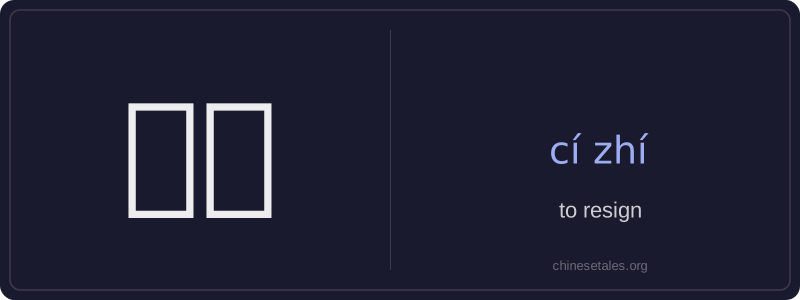
辞职 (cí zhí) is a verb meaning 'to resign' — to formally leave a job or position by one's own choice. The first character, 辞 (cí), means 'to take leave of' or 'to decline', and the second, 职 (zhí), means 'duty', 'post', or 'position'. Together, they literally convey 'taking leave from one's post', capturing the intentional, formal nature of ending employment. It is commonly used in professional, academic, or organizational contexts — for example, when an employee submits a resignation letter or announces departure from a company, school, or committee.
This word carries a neutral-to-formal register and implies responsibility and intentionality; it is not used for involuntary termination (which would be 解雇 jiěgù) or casual quitting (e.g., 离职 lízhí is broader and more neutral). 辞职 often appears with time markers (e.g., 明天辞职), modal verbs (e.g., 想辞职), or in written notices (e.g., 提出辞职). It’s frequently paired with phrases like '递交辞职信' (submit a resignation letter) or '正式辞职' (formally resign).
Example Sentences
Related Words
国语
‘Guó yǔ’ literally means 'national language'—
面条
‘面条’ (miàn tiáo) literally means ‘flour str
无论谁
‘无论谁’ (wú lùn shéi) is a pronoun meaning
背后
背后 literally means 'back + behind' and functions
外语
‘外语’ literally means ‘outside language’ —
认同
‘认同’ (tóng rèn) is a verb meaning ‘to ident
中学
'Zhōngxué' literally combines 'zhōng' (middle)
见面
见面 literally means 'see face' — combining 见 (t