Word Explanation
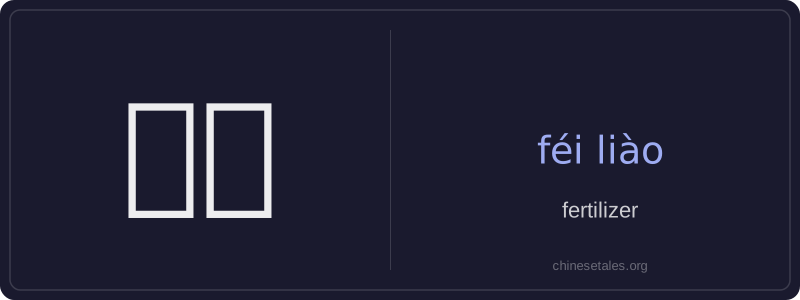
‘肥料’ (fèi liào) literally means ‘fat material’ — ‘肥’ (féi) originally refers to richness or fertility, and ‘料’ (liào) means ‘material’ or ‘substance’. Together, they denote any substance added to soil to supply essential nutrients (like nitrogen, phosphorus, and potassium) that help plants grow stronger and produce better yields. It’s a general, neutral-term noun used across agriculture, gardening, and environmental science.
Fertilizers can be natural (e.g., compost, manure) or synthetic (e.g., urea, ammonium nitrate). In daily life, gardeners, farmers, and even home plant enthusiasts use this word when discussing soil health or crop care. While ‘肥料’ is the standard term, context determines whether the fertilizer is organic or chemical — the word itself doesn’t specify type unless modified (e.g., 有机肥料 ‘organic fertilizer’).
Example Sentences
Related Words
国语
‘Guó yǔ’ literally means 'national language'—
面条
‘面条’ (miàn tiáo) literally means ‘flour str
背后
背后 literally means 'back + behind' and functions
无论谁
‘无论谁’ (wú lùn shéi) is a pronoun meaning
中学
'Zhōngxué' literally combines 'zhōng' (middle)
外语
‘外语’ literally means ‘outside language’ —
认同
‘认同’ (tóng rèn) is a verb meaning ‘to ident
见面
见面 literally means 'see face' — combining 见 (t