Word Explanation
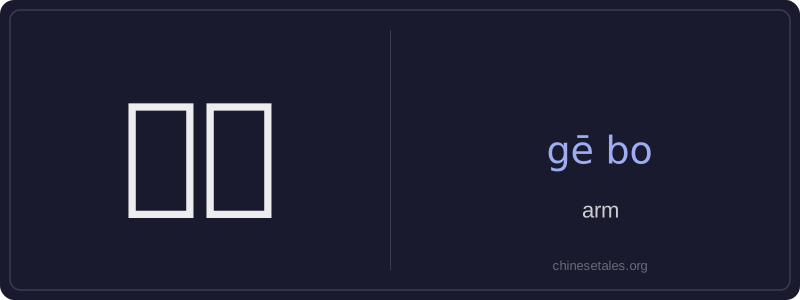
‘Gēbo’ (胳膊) is the standard Mandarin word for 'arm' — specifically the entire upper limb from shoulder to wrist, though in everyday speech it often refers to the upper arm or the arm as a whole. The two characters are inseparable in modern usage: 胳 (gē) and 膊 (bo) each carry no independent meaning in this context and only combine to form this disyllabic noun. Historically, they derive from ancient terms related to limbs and joints, but today 胳膊 functions as a single lexical unit.
This word is neutral in register and used widely across spoken and written Chinese — in medical contexts (e.g., checking arm strength), daily descriptions (e.g., stretching one’s arms), and idiomatic expressions (e.g., 胳膊肘往外拐 — 'elbow pointing outward', meaning disloyal). Unlike the more formal or technical term 手臂 (shǒubì), 胳膊 feels natural and colloquial, especially in northern dialects and informal conversation.
Example Sentences
Related Words
国语
‘Guó yǔ’ literally means 'national language'—
面条
‘面条’ (miàn tiáo) literally means ‘flour str
背后
背后 literally means 'back + behind' and functions
无论谁
‘无论谁’ (wú lùn shéi) is a pronoun meaning
中学
'Zhōngxué' literally combines 'zhōng' (middle)
外语
‘外语’ literally means ‘outside language’ —
认同
‘认同’ (tóng rèn) is a verb meaning ‘to ident
不对
不对 (bù duì) literally combines 不 (bù), meani