Word Explanation
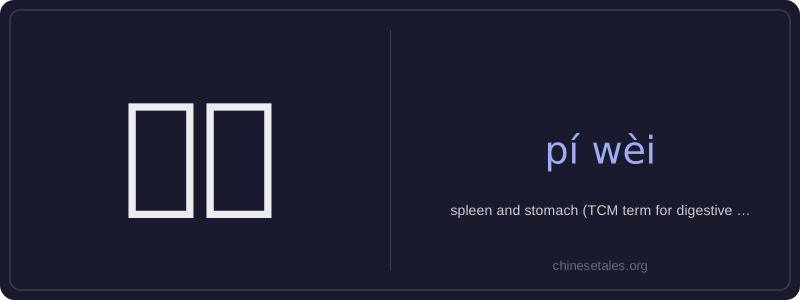
In Traditional Chinese Medicine (TCM), 'pí wèi' literally means 'spleen and stomach', but it functions as a unified concept representing the entire digestive system—not just the anatomical organs. The spleen (pí) governs transformation and transportation of food and fluids, while the stomach (wèi) receives and ripens food; together, they form the foundation of qi and blood production. This term reflects TCM’s holistic view: imbalance in the 'pí wèi' often manifests as poor appetite, bloating, fatigue, or loose stools.
'Pí wèi' is commonly used in health-related contexts—especially when discussing diet, herbal remedies, or seasonal wellness. For example, people may say their 'pí wèi is weak' (pí wèi xū) to describe chronic digestive sensitivity, or recommend 'strengthening the pí wèi' through warm foods and regular meals. It rarely appears in modern biomedical discussions and is almost exclusively used within TCM, wellness, or folk health advice.
Example Sentences
Related Words
国语
‘Guó yǔ’ literally means 'national language'—
面条
‘面条’ (miàn tiáo) literally means ‘flour str
无论谁
‘无论谁’ (wú lùn shéi) is a pronoun meaning
背后
背后 literally means 'back + behind' and functions
外语
‘外语’ literally means ‘outside language’ —
认同
‘认同’ (tóng rèn) is a verb meaning ‘to ident
中学
'Zhōngxué' literally combines 'zhōng' (middle)
认为
‘认为’ (rèn wéi) is a transitive verb meaning