Word Explanation
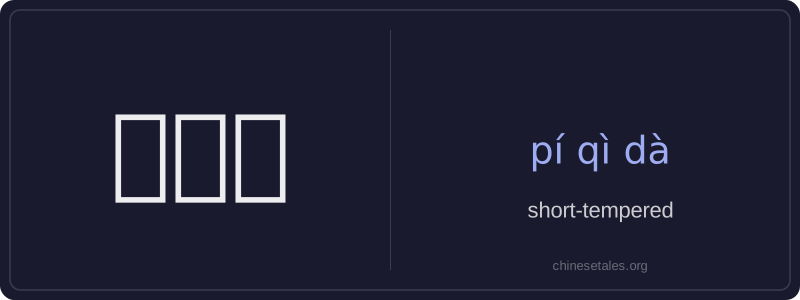
'Pí qì dà' literally combines 'pí' (spleen), 'qì' (vital energy or temperament), and 'dà' (big). In traditional Chinese medicine and idiomatic usage, the spleen is associated with emotional regulation—particularly irritability—so 'big spleen-energy' metaphorically means a person’s temper flares easily. It describes someone who gets angry quickly, reacts strongly to small frustrations, and may have outbursts or impatience.
This expression is informal and commonly used in everyday speech, especially when describing personality traits of family members, colleagues, or public figures. It carries a slightly negative or teasing connotation—not as harsh as '暴躁' (explosive-tempered), but still implies difficulty managing emotions. It's often paired with subject pronouns or nouns (e.g., '他脾气大') and rarely used in formal writing or polite self-reference.
Example Sentences
Related Words
国语
‘Guó yǔ’ literally means 'national language'—
面条
‘面条’ (miàn tiáo) literally means ‘flour str
无论谁
‘无论谁’ (wú lùn shéi) is a pronoun meaning
背后
背后 literally means 'back + behind' and functions
外语
‘外语’ literally means ‘outside language’ —
认为
‘认为’ (rèn wéi) is a transitive verb meaning
认同
‘认同’ (tóng rèn) is a verb meaning ‘to ident
中学
'Zhōngxué' literally combines 'zhōng' (middle)