Word Explanation
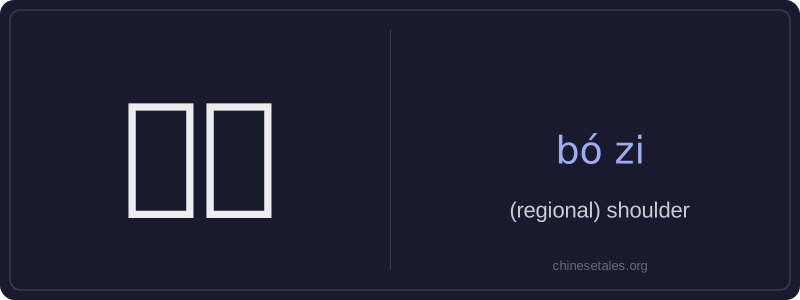
‘膊子’ (bó zi) is a regional term—primarily used in northern Chinese dialects, especially in rural or agricultural contexts—to refer to the shoulder. It is not standard Mandarin; in formal or national speech, ‘肩膀’ (jiān bǎng) is preferred. The character ‘膊’ means ‘upper arm’ or ‘shoulder area’ and appears in words like ‘胳膊’ (gē bo, ‘arm’); ‘子’ is a common noun suffix that adds a colloquial, diminutive, or concrete nuance.
This word often appears when describing livestock anatomy (e.g., cuts of meat or animal conformation), physical labor involving carrying loads on the shoulder, or folk expressions about strength or endurance. It carries an earthy, rustic tone and may sound outdated or dialectal to urban speakers. Learners should recognize it in regional literature or oral narratives but avoid using it in formal writing or standard conversation unless intentionally evoking local flavor.
Example Sentences
Related Words
国语
‘Guó yǔ’ literally means 'national language'—
面条
‘面条’ (miàn tiáo) literally means ‘flour str
无论谁
‘无论谁’ (wú lùn shéi) is a pronoun meaning
背后
背后 literally means 'back + behind' and functions
外语
‘外语’ literally means ‘outside language’ —
认为
‘认为’ (rèn wéi) is a transitive verb meaning
认同
‘认同’ (tóng rèn) is a verb meaning ‘to ident
中学
'Zhōngxué' literally combines 'zhōng' (middle)