Word Explanation
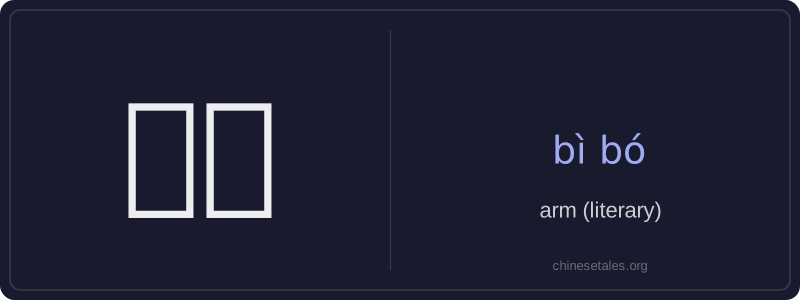
臂膊 (bì bó) is a literary or classical term for 'arm', referring to the entire upper limb from shoulder to wrist. Though composed of two characters—臂 (bì), meaning 'arm' or 'upper limb', and 膊 (bó), meaning 'shoulder' or 'upper arm'—together they form a compound that emphasizes the arm as a strong, functional part of the body, often evoking physical strength, labor, or traditional imagery. It appears frequently in classical texts, idioms, martial arts descriptions, and formal or poetic contexts, but is rarely used in everyday spoken Mandarin.
In modern spoken Chinese, people almost always say 手臂 (shǒu bì) or simply 手 (shǒu, though this usually means 'hand') in casual contexts. 臂膊 carries a slightly archaic, vivid, or emphatic tone—often highlighting muscularity, exertion, or bodily presence. You’ll encounter it in literature describing warriors, farmers, or laborers, or in fixed expressions like 振臂膊 (zhèn bì bó, 'to raise one’s arm'—figuratively, to rally others).
Example Sentences
Related Words
国语
‘Guó yǔ’ literally means 'national language'—
面条
‘面条’ (miàn tiáo) literally means ‘flour str
无论谁
‘无论谁’ (wú lùn shéi) is a pronoun meaning
背后
背后 literally means 'back + behind' and functions
外语
‘外语’ literally means ‘outside language’ —
认为
‘认为’ (rèn wéi) is a transitive verb meaning
认同
‘认同’ (tóng rèn) is a verb meaning ‘to ident
中学
'Zhōngxué' literally combines 'zhōng' (middle)