Word Explanation
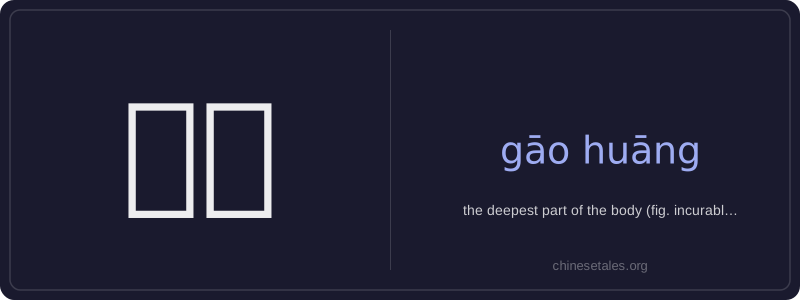
‘Gāo huāng’ literally refers to two specific regions in traditional Chinese medicine: ‘gāo’ is the fatty tissue beneath the heart and lungs, and ‘huāng’ is the membrane between the heart and diaphragm—both considered inaccessible to medicinal treatment. Together, they symbolize the deepest, most vital, and hardest-to-reach parts of the body.
In modern usage, ‘gāo huāng’ is almost exclusively figurative, meaning a condition so severe or deeply rooted that it is beyond cure or remedy—especially for illnesses, social problems, or entrenched habits. It appears mainly in formal writing, idioms (e.g., ‘bìng rù gāo huāng’), and literary or medical discourse. Though rooted in anatomy, it is rarely used literally today; learners should treat it as a fixed, classical compound with strong connotations of terminality or irreversibility.
Example Sentences
Related Words
国语
‘Guó yǔ’ literally means 'national language'—
面条
‘面条’ (miàn tiáo) literally means ‘flour str
无论谁
‘无论谁’ (wú lùn shéi) is a pronoun meaning
背后
背后 literally means 'back + behind' and functions
外语
‘外语’ literally means ‘outside language’ —
认为
‘认为’ (rèn wéi) is a transitive verb meaning
认同
‘认同’ (tóng rèn) is a verb meaning ‘to ident
中学
'Zhōngxué' literally combines 'zhōng' (middle)