Word Explanation
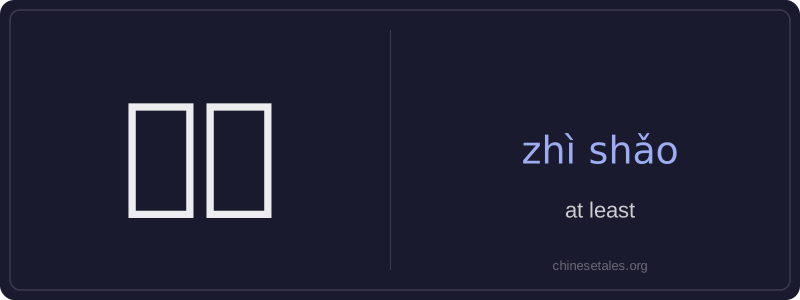
'至少' (zhì shǎo) literally combines '至' (meaning 'to the utmost, up to') and '少' (meaning 'few, little'), together conveying the idea of a minimum threshold — 'at least'. It functions as an adverb modifying verbs, adjectives, or numerals to indicate the lowest acceptable or expected quantity, frequency, duration, or degree. It’s commonly used in both spoken and written Chinese across contexts like time ('at least ten minutes'), quantity ('at least three people'), probability ('at least possible'), or obligation ('you must study at least two hours').
The phrase emphasizes a lower bound without implying an upper limit. Unlike English, '至少' never appears at the end of a sentence; it usually precedes the element it modifies — often a number or noun phrase — and is frequently paired with '也' (also) for emphasis, as in '至少也要...' ('you must at least...'). It carries a neutral, factual tone and is appropriate in formal reports, casual conversation, and academic writing.
Example Sentences
Related Words
国语
‘Guó yǔ’ literally means 'national language'—
面条
‘面条’ (miàn tiáo) literally means ‘flour str
无论谁
‘无论谁’ (wú lùn shéi) is a pronoun meaning
背后
背后 literally means 'back + behind' and functions
外语
‘外语’ literally means ‘outside language’ —
认为
‘认为’ (rèn wéi) is a transitive verb meaning
认同
‘认同’ (tóng rèn) is a verb meaning ‘to ident
不对
不对 (bù duì) literally combines 不 (bù), meani