Word Explanation
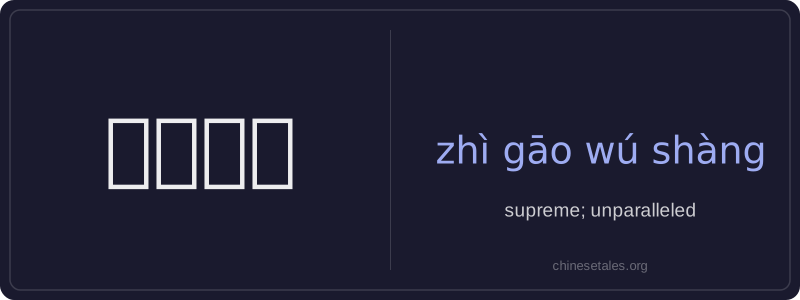
至高无上 literally means 'reaching the highest point with nothing above it' — combining 至 (extreme, utmost), 高 (high, elevated), 无 (without), and 上 (above, superior). Together, it conveys absolute supremacy: unmatched in authority, status, value, or excellence. It’s a formal, literary term often used to describe ideals, principles, institutions, or figures held in the highest possible esteem — such as national sovereignty, moral standards, or revered leaders.
This phrase carries strong positive connotations and is frequently found in political discourse, classical literature, and ceremonial language. While grammatically an adjective, it usually modifies abstract nouns (e.g., 权威, 地位, 尊严) and rarely describes concrete, everyday objects. It implies finality and exclusivity — if something is 至高无上, there can be no equal or higher alternative. Its tone is solemn and weighty, making it unsuitable for casual speech or humorous contexts.
Example Sentences
Related Words
国语
‘Guó yǔ’ literally means 'national language'—
无论谁
‘无论谁’ (wú lùn shéi) is a pronoun meaning
面条
‘面条’ (miàn tiáo) literally means ‘flour str
背后
背后 literally means 'back + behind' and functions
外语
‘外语’ literally means ‘outside language’ —
认为
‘认为’ (rèn wéi) is a transitive verb meaning
认同
‘认同’ (tóng rèn) is a verb meaning ‘to ident
不对
不对 (bù duì) literally combines 不 (bù), meani