Word Explanation
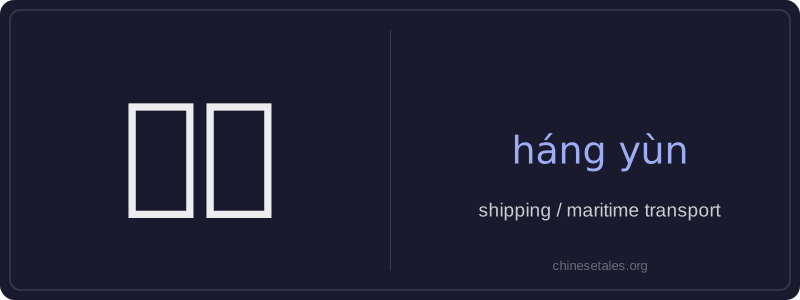
航运 refers to the transportation of goods or passengers by sea or waterways. It combines two characters: 航 (háng), meaning 'to navigate' or 'to sail', and 运 (yùn), meaning 'to transport' or 'to carry'. Together, they literally mean 'sailing transport', emphasizing movement across maritime routes rather than land or air. This term is commonly used in business, logistics, and government contexts to describe commercial shipping operations, port activities, and international trade infrastructure.
The word is formal and technical—it rarely appears in casual daily conversation but is frequent in news reports, economic analyses, and official documents about trade, ports, or supply chains. It often collocates with words like 公司 (company), 港口 (port), 贸易 (trade), or 国际 (international). While it primarily denotes sea-based transport, it can sometimes include inland waterway shipping (e.g., rivers and canals) when discussed in broader logistical frameworks.
Example Sentences
Related Words
国语
‘Guó yǔ’ literally means 'national language'—
无论谁
‘无论谁’ (wú lùn shéi) is a pronoun meaning
面条
‘面条’ (miàn tiáo) literally means ‘flour str
认同
‘认同’ (tóng rèn) is a verb meaning ‘to ident
背后
背后 literally means 'back + behind' and functions
外语
‘外语’ literally means ‘outside language’ —
认为
‘认为’ (rèn wéi) is a transitive verb meaning
不对
不对 (bù duì) literally combines 不 (bù), meani