Word Explanation
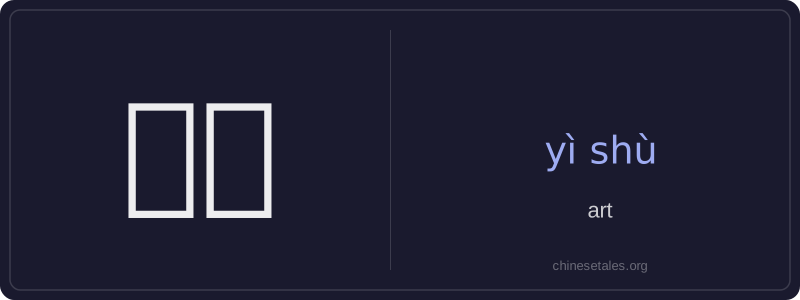
艺术 (yì shù) means 'art' in the broad sense — encompassing visual arts like painting and sculpture, performing arts like music and dance, and literary arts like poetry and fiction. The character 艺 (yì) originally meant 'skill' or 'craft', while 术 (shù) means 'technique' or 'method'; together, they convey the idea of cultivated skill expressed creatively. Unlike English 'art', which can sometimes imply fine art alone, 艺术 often includes traditional crafts, folk performances, and even calligraphy as legitimate forms.
This word is commonly used in formal and educational contexts: you’ll see it in course names (e.g., 艺术课), museum titles (e.g., 美术馆 — Art Museum), and discussions about culture and aesthetics. It’s a neutral, standard-term noun — neither colloquial nor overly academic — and appears frequently in news, textbooks, and everyday conversation about creativity and expression.
Example Sentences
Related Words
国语
‘Guó yǔ’ literally means 'national language'—
无论谁
‘无论谁’ (wú lùn shéi) is a pronoun meaning
面条
‘面条’ (miàn tiáo) literally means ‘flour str
外语
‘外语’ literally means ‘outside language’ —
认同
‘认同’ (tóng rèn) is a verb meaning ‘to ident
中学
'Zhōngxué' literally combines 'zhōng' (middle)
背后
背后 literally means 'back + behind' and functions
认为
‘认为’ (rèn wéi) is a transitive verb meaning