Word Explanation
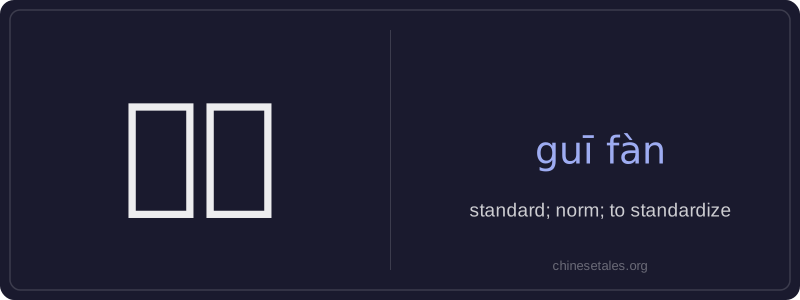
规范 (guīfàn) is a versatile word meaning 'standard' or 'norm' as a noun, and 'to standardize' or 'to regulate' as a verb. The character 规 (guī) originally meant 'compass'—a tool for drawing precise circles—and came to symbolize rules or guidelines; 范 (fàn) means 'model', 'pattern', or 'mold', suggesting something that sets an example or template. Together, they convey the idea of established, authoritative benchmarks that guide behavior, language use, technical processes, or social conduct.
This word appears frequently in formal, institutional, and professional contexts: education policy, workplace procedures, language teaching materials, software documentation, and government regulations. As a noun, it's often modified by adjectives like 'national', 'industry', or 'technical'; as a verb, it commonly takes an object (e.g., 规范管理 — 'standardize management') and appears in written or semi-formal speech rather than casual conversation.
Example Sentences
Related Words
国语
‘Guó yǔ’ literally means 'national language'—
面条
‘面条’ (miàn tiáo) literally means ‘flour str
无论谁
‘无论谁’ (wú lùn shéi) is a pronoun meaning
外语
‘外语’ literally means ‘outside language’ —
认同
‘认同’ (tóng rèn) is a verb meaning ‘to ident
不对
不对 (bù duì) literally combines 不 (bù), meani
中学
'Zhōngxué' literally combines 'zhōng' (middle)
背后
背后 literally means 'back + behind' and functions