Word Explanation
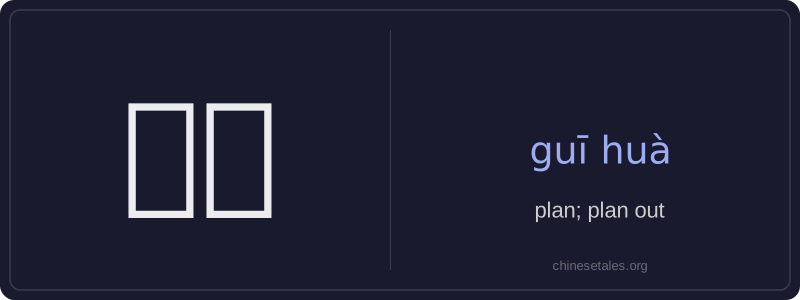
规划 (guī huà) means 'plan' as a noun or 'to plan out' as a verb. It combines 规 (guī), meaning 'rule', 'standard', or 'regulation', and 划 (huà), meaning 'to draw', 'to outline', or 'to demarcate'. Together, they convey the idea of methodically designing or laying out something in advance—especially large-scale, structured, or official plans like city development, project timelines, or long-term goals. Unlike casual planning (e.g., 打算), 规划 implies formality, intentionality, and often institutional or strategic involvement.
This word is commonly used in contexts such as urban development (城市规划), education (学业规划), career planning (职业规划), or environmental protection (生态保护规划). It frequently appears with modifiers like 长期 (long-term), 总体 (overall), or 详细 (detailed), and often follows verbs like 制定 (to formulate) or 实施 (to implement). While it can be used for personal goals, its default register leans formal or administrative—not for everyday, spontaneous decisions.
Example Sentences
Related Words
国语
‘Guó yǔ’ literally means 'national language'—
面条
‘面条’ (miàn tiáo) literally means ‘flour str
无论谁
‘无论谁’ (wú lùn shéi) is a pronoun meaning
外语
‘外语’ literally means ‘outside language’ —
认同
‘认同’ (tóng rèn) is a verb meaning ‘to ident
不对
不对 (bù duì) literally combines 不 (bù), meani
中学
'Zhōngxué' literally combines 'zhōng' (middle)
背后
背后 literally means 'back + behind' and functions