Word Explanation
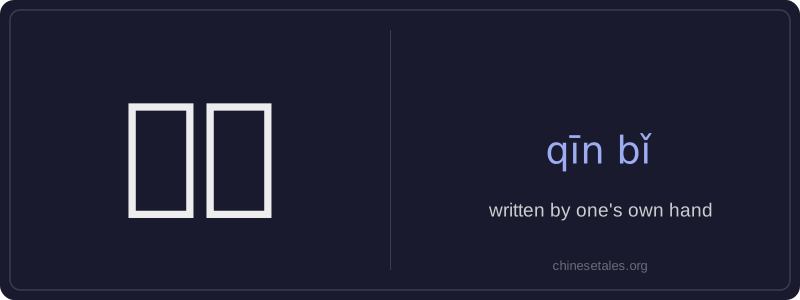
‘亲笔’ literally means ‘one’s own hand’—combining 亲 (qīn), meaning ‘personal, intimate, or one’s own,’ and 笔 (bǐ), meaning ‘pen’ or ‘writing instrument.’ Together, they form a noun meaning ‘writing done personally by the individual,’ emphasizing authenticity, intentionality, and direct authorship. It is not used for everyday handwriting but reserved for formal, meaningful contexts where personal involvement matters—such as signatures, letters of recommendation, official documents, or inscribed books.
This term carries a tone of sincerity and responsibility: saying something is ‘亲笔’ implies the writer takes full ownership of its content and has physically written it—not delegated it to another person or typed it. It often appears in phrases like 亲笔签名 (qīn bǐ qiān míng, ‘handwritten signature’) or 亲笔信 (qīn bǐ xìn, ‘handwritten letter’). While modern usage sometimes extends metaphorically (e.g., a CEO’s ‘亲笔信’ may be typed but still personally authored), the core idea remains personal authorship and authenticity.
Example Sentences
Related Words
国语
‘Guó yǔ’ literally means 'national language'—
面条
‘面条’ (miàn tiáo) literally means ‘flour str
无论谁
‘无论谁’ (wú lùn shéi) is a pronoun meaning
外语
‘外语’ literally means ‘outside language’ —
认同
‘认同’ (tóng rèn) is a verb meaning ‘to ident
不对
不对 (bù duì) literally combines 不 (bù), meani
中学
'Zhōngxué' literally combines 'zhōng' (middle)
背后
背后 literally means 'back + behind' and functions