Word Explanation
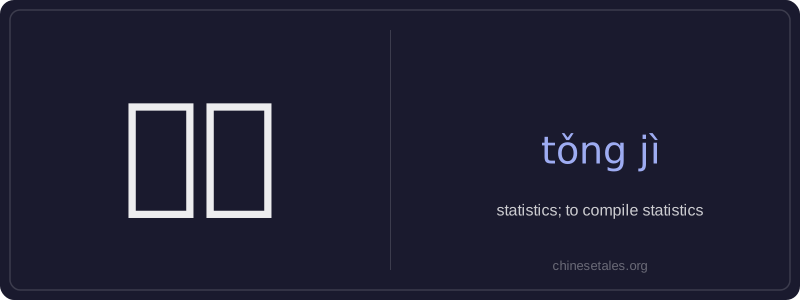
统计 (tǒng jì) is a versatile word meaning both 'statistics' (as a noun) and 'to compile statistics' or 'to tally' (as a verb). The first character 统 (tǒng) means 'to unify' or 'to bring together', while 计 (jì) means 'to calculate' or 'to count'. Together, they convey the idea of gathering data systematically and analyzing it as a unified whole. It’s commonly used in academic, governmental, business, and research contexts — for example, when reporting population figures, survey results, or economic indicators.
This word appears frequently in formal writing and spoken reports, but rarely in casual conversation. As a noun, it’s often paired with classifiers like '项' (a statistic), '数据' (data), or '报告' (report); as a verb, it usually takes an object (e.g., 统计人数 — 'to tally the number of people') and may be followed by aspect markers like 了 or 过. It implies methodical, large-scale counting rather than simple headcounts.
Example Sentences
Related Words
国语
‘Guó yǔ’ literally means 'national language'—
面条
‘面条’ (miàn tiáo) literally means ‘flour str
无论谁
‘无论谁’ (wú lùn shéi) is a pronoun meaning
外语
‘外语’ literally means ‘outside language’ —
认同
‘认同’ (tóng rèn) is a verb meaning ‘to ident
不对
不对 (bù duì) literally combines 不 (bù), meani
中学
'Zhōngxué' literally combines 'zhōng' (middle)
背后
背后 literally means 'back + behind' and functions