Word Explanation
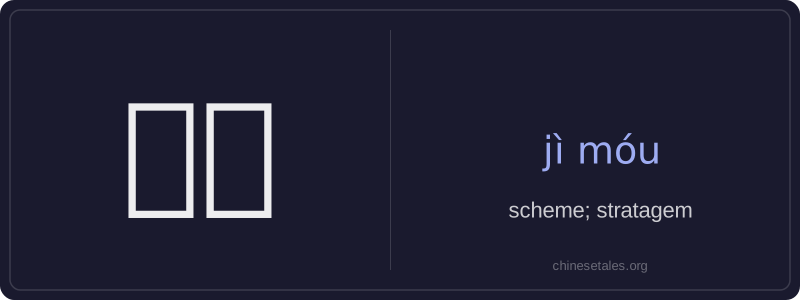
计谋 (jì móu) is a formal, literary noun meaning 'scheme' or 'stratagem' — a carefully devised plan, often to outwit an opponent or achieve a goal through cleverness rather than force. The first character 计 (jì) means 'to calculate' or 'plan', while 谋 (móu) means 'to scheme' or 'plot'; together, they emphasize intentional, strategic thinking. It carries a neutral-to-slightly-negative connotation depending on context: it can describe military tactics in historical texts or cunning behavior in stories.
This word is common in classical Chinese, historical novels (e.g., Romance of the Three Kingdoms), and modern idioms like 苦肉计 (kǔ ròu jì, 'the self-injury stratagem'). It rarely appears in casual speech; instead, everyday contexts use simpler terms like 办法 (bàn fǎ, 'solution') or 计划 (jì huà, 'plan'). 计谋 is typically used with verbs like 设计 (shè jì, 'to devise'), 使用 (shǐ yòng, 'to employ'), or 揭穿 (jiē chuān, 'to expose').
Example Sentences
Related Words
国语
‘Guó yǔ’ literally means 'national language'—
面条
‘面条’ (miàn tiáo) literally means ‘flour str
无论谁
‘无论谁’ (wú lùn shéi) is a pronoun meaning
外语
‘外语’ literally means ‘outside language’ —
认同
‘认同’ (tóng rèn) is a verb meaning ‘to ident
不对
不对 (bù duì) literally combines 不 (bù), meani
中学
'Zhōngxué' literally combines 'zhōng' (middle)
背后
背后 literally means 'back + behind' and functions