Word Explanation
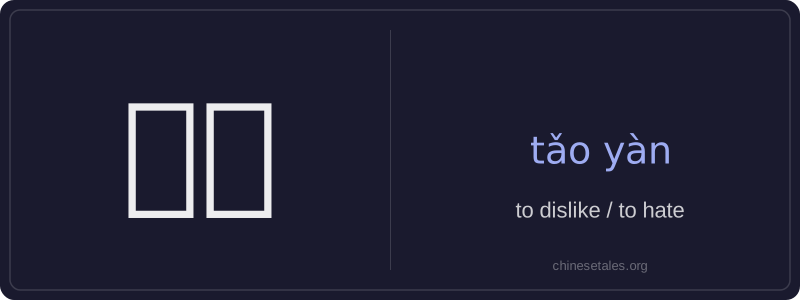
讨厌 (tǎo yàn) is a verb meaning 'to dislike' or 'to hate' — expressing a strong, often visceral feeling of aversion toward someone or something. The first character 讨 (tǎo) originally meant 'to seek' or 'to demand', and in this compound it carries a sense of 'seeking to avoid'; 厌 (yàn) means 'to be tired of', 'to loathe', or 'to find unbearable'. Together, they form an emphatic, colloquial expression of distaste that’s more intense than 不喜欢 (bù xǐhuān) but less formal or extreme than 憎恨 (zēnghèn). It’s commonly used in everyday speech, especially by children and young adults.
讨厌 frequently appears in spoken Chinese to express mild-to-moderate irritation or disapproval — for example, reacting to noisy neighbors, bad weather, or annoying habits. It can also function as an interjection ('Ugh!' or 'How annoying!') when said alone with rising intonation. Though emotionally charged, it’s rarely considered rude in informal contexts unless heavily emphasized or directed at people face-to-face without softening words.
Example Sentences
Related Words
国语
‘Guó yǔ’ literally means 'national language'—
面条
‘面条’ (miàn tiáo) literally means ‘flour str
无论谁
‘无论谁’ (wú lùn shéi) is a pronoun meaning
外语
‘外语’ literally means ‘outside language’ —
认同
‘认同’ (tóng rèn) is a verb meaning ‘to ident
不对
不对 (bù duì) literally combines 不 (bù), meani
中学
'Zhōngxué' literally combines 'zhōng' (middle)
背后
背后 literally means 'back + behind' and functions