Word Explanation
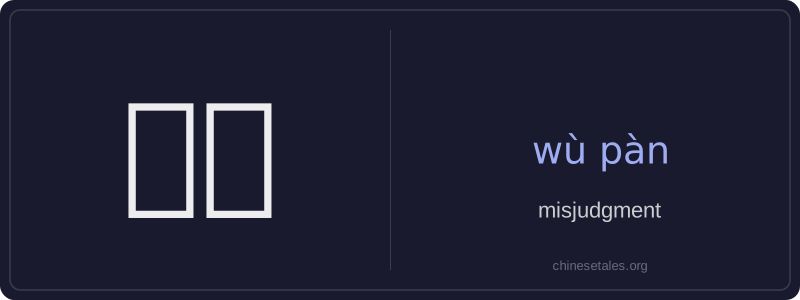
‘误判’ literally combines ‘误’ (wù), meaning ‘wrong’ or ‘mistaken’, and ‘判’ (pàn), meaning ‘to judge’ or ‘to determine’. Together, they form a noun meaning ‘misjudgment’ — an incorrect assessment or conclusion drawn from incomplete, misleading, or misinterpreted information. It implies that the judgment was reasonable in intent but flawed in outcome.
This word is commonly used in formal or serious contexts: medical diagnosis (e.g., misreading test results), legal proceedings (e.g., a jury’s erroneous verdict), sports officiating (e.g., wrongly calling a foul), or technical analysis (e.g., AI misclassifying an image). It carries a neutral-to-negative tone and often suggests accountability or the need for review — unlike more casual terms like ‘搞错’ (gǎo cuò, ‘to get something wrong’), ‘误判’ emphasizes the gravity and consequential nature of the error.
Example Sentences
Related Words
国语
‘Guó yǔ’ literally means 'national language'—
面条
‘面条’ (miàn tiáo) literally means ‘flour str
无论谁
‘无论谁’ (wú lùn shéi) is a pronoun meaning
不对
不对 (bù duì) literally combines 不 (bù), meani
外语
‘外语’ literally means ‘outside language’ —
认同
‘认同’ (tóng rèn) is a verb meaning ‘to ident
中学
'Zhōngxué' literally combines 'zhōng' (middle)
背后
背后 literally means 'back + behind' and functions