Word Explanation
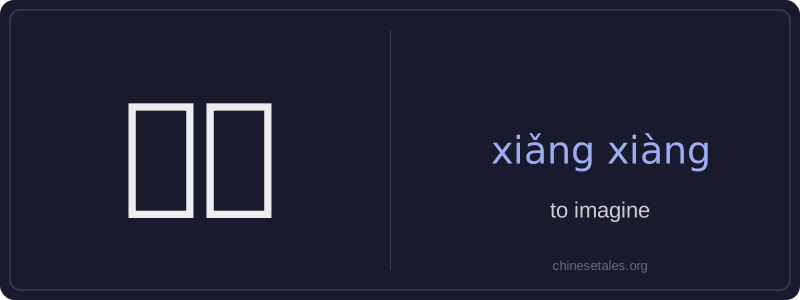
‘想像’ (xiǎng xiàng) is a verb meaning ‘to imagine’ — to form a mental image or concept of something not physically present or not yet real. The first character 想 (xiǎng) means ‘to think’ or ‘to want’, and the second 像 (xiàng) means ‘to resemble’ or ‘image’; together, they convey the idea of mentally picturing or visualizing something by drawing on thought and likeness. It’s commonly used in creative, hypothetical, or reflective contexts — such as imagining future scenarios, fictional characters, or abstract ideas.
This word is slightly more formal or literary than the colloquial synonym 想象 (which is actually the same pronunciation and meaning but uses the simplified character for the second component). In modern standard Chinese, both forms are accepted, though 想象 is more common in mainland publications. ‘想像’ appears frequently in education, literature, and psychological discussions about cognition and creativity.
Example Sentences
Related Words
国语
‘Guó yǔ’ literally means 'national language'—
面条
‘面条’ (miàn tiáo) literally means ‘flour str
无论谁
‘无论谁’ (wú lùn shéi) is a pronoun meaning
不对
不对 (bù duì) literally combines 不 (bù), meani
外语
‘外语’ literally means ‘outside language’ —
认同
‘认同’ (tóng rèn) is a verb meaning ‘to ident
中学
'Zhōngxué' literally combines 'zhōng' (middle)
背后
背后 literally means 'back + behind' and functions