Word Explanation
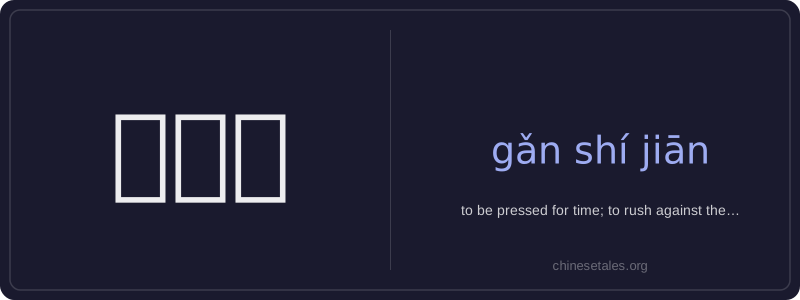
'Gǎn shí jiān' literally means 'to rush time' — combining 赶 (gǎn, 'to hurry, to catch up with'), 时 (shí, 'time'), and 间 (jiān, 'interval, period'). Though it contains the noun 'time', the phrase functions as a verb meaning to be in a hurry because of time pressure — not merely moving quickly, but specifically racing against a deadline or schedule. It implies urgency driven by external constraints like appointments, transport schedules, or work deadlines.
This expression is common in everyday spoken Mandarin, especially when explaining why someone can’t linger, accept an invitation, or complete a task thoroughly. It’s neutral in register — appropriate for both casual conversations and professional contexts — and often appears with modal verbs like 得 (de) or 不 (bù), as in 我得赶时间 ('I have to rush') or 我们来不及赶时间了 ('We don’t have time to rush anymore'). It conveys a sense of pragmatic urgency rather than anxiety or panic.
Example Sentences
Related Words
国语
‘Guó yǔ’ literally means 'national language'—
面条
‘面条’ (miàn tiáo) literally means ‘flour str
无论谁
‘无论谁’ (wú lùn shéi) is a pronoun meaning
不对
不对 (bù duì) literally combines 不 (bù), meani
外语
‘外语’ literally means ‘outside language’ —
认同
‘认同’ (tóng rèn) is a verb meaning ‘to ident
中学
'Zhōngxué' literally combines 'zhōng' (middle)
背后
背后 literally means 'back + behind' and functions