Word Explanation
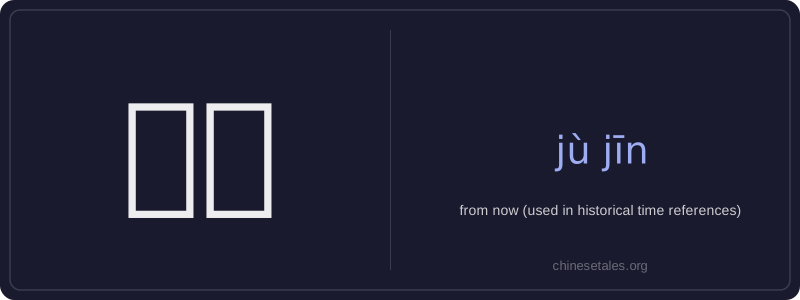
距今 literally means 'distance from now' and functions as a time expression indicating how many years (or other time units) have passed since a past event up to the present moment. The character 距 means 'to be distant from' or 'separation', while 今 means 'now' or 'the present'. Together, they form a fixed phrase used almost exclusively in historical, archaeological, or academic contexts to quantify temporal distance — for example, when dating ancient artifacts, fossils, or historical events.
This phrase always appears before a time quantity (e.g., 五千年前, 三百年) and is followed by a noun or verb phrase describing the event or object being dated. It carries a formal, objective tone and is rarely used in casual speech. You’ll commonly see it in textbooks, museum labels, news reports about discoveries, or scholarly writing — never in daily conversation like 'I ate lunch two hours ago' (which uses 过去 instead).
Example Sentences
Related Words
国语
‘Guó yǔ’ literally means 'national language'—
面条
‘面条’ (miàn tiáo) literally means ‘flour str
无论谁
‘无论谁’ (wú lùn shéi) is a pronoun meaning
不对
不对 (bù duì) literally combines 不 (bù), meani
外语
‘外语’ literally means ‘outside language’ —
认同
‘认同’ (tóng rèn) is a verb meaning ‘to ident
中学
'Zhōngxué' literally combines 'zhōng' (middle)
背后
背后 literally means 'back + behind' and functions