Word Explanation
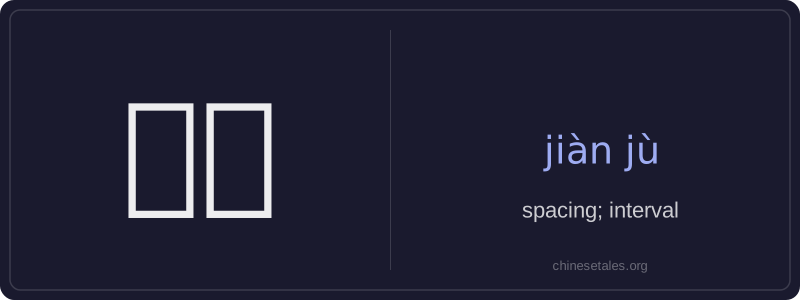
‘间距’ (jiàn jù) is a compound noun meaning ‘spacing’ or ‘interval’—the measurable distance between two objects, points, or elements. The first character 间 (jiàn) means ‘between’ or ‘interval,’ while 距 (jù) means ‘distance’ or ‘to be apart.’ Together, they emphasize the physical or conceptual gap separating things. This word is commonly used in technical, design, architectural, and typographic contexts—for example, when discussing line spacing in text, gaps between fence posts, or distances between subway stations.
Unlike more general words like ‘距离’ (jùlí, ‘distance’), ‘间距’ implies regularity, intentionality, or standardization—it often appears in specifications, measurements, or instructions where precise separation matters. It’s neutral in register and frequently appears in written Chinese, especially in manuals, engineering documents, and UI design guidelines. While it can refer to time intervals in specialized usage (e.g., ‘发车间距’ for train departure intervals), its primary sense remains spatial.
Example Sentences
Related Words
国语
‘Guó yǔ’ literally means 'national language'—
面条
‘面条’ (miàn tiáo) literally means ‘flour str
无论谁
‘无论谁’ (wú lùn shéi) is a pronoun meaning
不对
不对 (bù duì) literally combines 不 (bù), meani
外语
‘外语’ literally means ‘outside language’ —
认同
‘认同’ (tóng rèn) is a verb meaning ‘to ident
中学
'Zhōngxué' literally combines 'zhōng' (middle)
背后
背后 literally means 'back + behind' and functions