Word Explanation
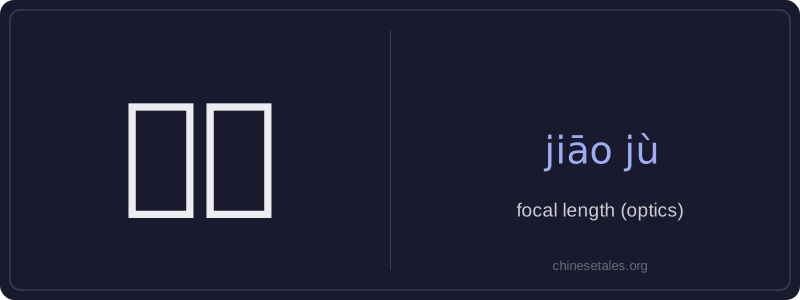
‘焦距’ (jiāo jù) is a technical noun in optics referring to the distance between the optical center of a lens (or mirror) and its focal point—the point where parallel light rays converge after passing through the lens. The character ‘焦’ (jiāo) originally means ‘burned’ or ‘scorched’, but here it carries the specialized meaning of ‘focus’ (as in ‘focal point’), derived from the idea of light concentrating intensely enough to burn. The character ‘距’ (jù) means ‘distance’ or ‘separation’. Together, 焦距 literally means ‘focus distance’.
This term is widely used in photography, physics education, eyewear prescriptions, and optical instrument design. It determines image magnification, field of view, and depth of field—for example, a telephoto lens has a long focal length, while a wide-angle lens has a short one. In everyday contexts, Chinese speakers may discuss focal length when choosing smartphone cameras, buying reading glasses, or adjusting microscopes in science labs.
Example Sentences
Related Words
国语
‘Guó yǔ’ literally means 'national language'—
面条
‘面条’ (miàn tiáo) literally means ‘flour str
无论谁
‘无论谁’ (wú lùn shéi) is a pronoun meaning
不对
不对 (bù duì) literally combines 不 (bù), meani
外语
‘外语’ literally means ‘outside language’ —
认同
‘认同’ (tóng rèn) is a verb meaning ‘to ident
中学
'Zhōngxué' literally combines 'zhōng' (middle)
背后
背后 literally means 'back + behind' and functions