Word Explanation
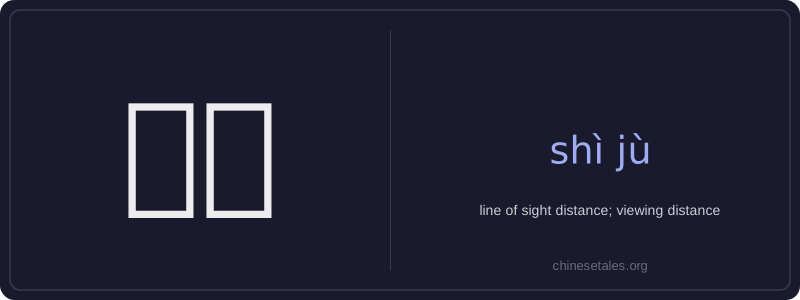
‘视距’ literally combines ‘视’ (shì), meaning ‘to see’ or ‘vision’, and ‘距’ (jù), meaning ‘distance’ or ‘span’. Together, it refers to the maximum distance at which an object can be clearly seen — the unobstructed straight-line distance between an observer’s eyes and a visible target. It is a technical term commonly used in fields like aviation, meteorology, traffic engineering, and military operations.
This word emphasizes optical clarity and physical line-of-sight conditions — not just how far something *is*, but how far it can *be seen* under current environmental factors (e.g., fog, haze, terrain). Unlike general terms for distance (such as ‘距离’), ‘视距’ specifically concerns visibility and visual perception. It often appears in safety guidelines, weather reports, and navigation instructions where clear sight is operationally critical.
Example Sentences
Related Words
国语
‘Guó yǔ’ literally means 'national language'—
面条
‘面条’ (miàn tiáo) literally means ‘flour str
无论谁
‘无论谁’ (wú lùn shéi) is a pronoun meaning
不对
不对 (bù duì) literally combines 不 (bù), meani
外语
‘外语’ literally means ‘outside language’ —
认同
‘认同’ (tóng rèn) is a verb meaning ‘to ident
中学
'Zhōngxué' literally combines 'zhōng' (middle)
背后
背后 literally means 'back + behind' and functions