Word Explanation
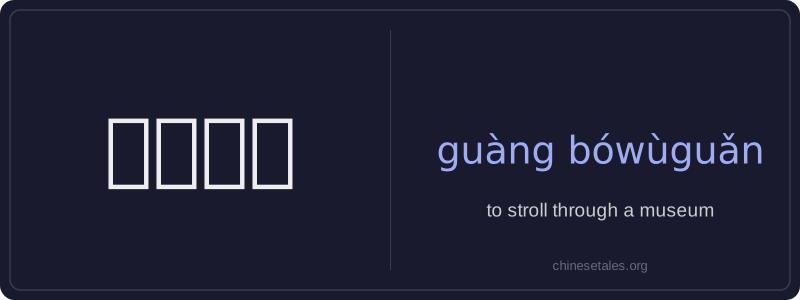
'逛博物馆' literally combines '逛' (to stroll, to window-shop) — a verb implying relaxed, unhurried movement — with '博物馆' (museum), a compound noun meaning 'repository of learning and culture'. Together, the phrase conveys the idea of visiting a museum not just for study or duty, but as a leisurely, exploratory activity — like browsing, observing, and enjoying at one’s own pace. It emphasizes the experiential, sensory, and often social aspect of the visit rather than focused research or academic purpose.
This phrase is commonly used in everyday spoken Chinese when describing weekend plans, travel itineraries, or casual cultural outings. It carries a warm, informal tone and is frequently heard among friends, families, or young adults. Unlike formal verbs like '参观' (cānguān, to visit formally) or '考察' (kǎochá, to inspect or investigate), '逛博物馆' suggests comfort, curiosity, and personal interest — similar to saying 'stroll through' or 'browse' a museum in English.
Example Sentences
Related Words
国语
‘Guó yǔ’ literally means 'national language'—
面条
‘面条’ (miàn tiáo) literally means ‘flour str
无论谁
‘无论谁’ (wú lùn shéi) is a pronoun meaning
不对
不对 (bù duì) literally combines 不 (bù), meani
外语
‘外语’ literally means ‘outside language’ —
认同
‘认同’ (tóng rèn) is a verb meaning ‘to ident
中学
'Zhōngxué' literally combines 'zhōng' (middle)
背后
背后 literally means 'back + behind' and functions